
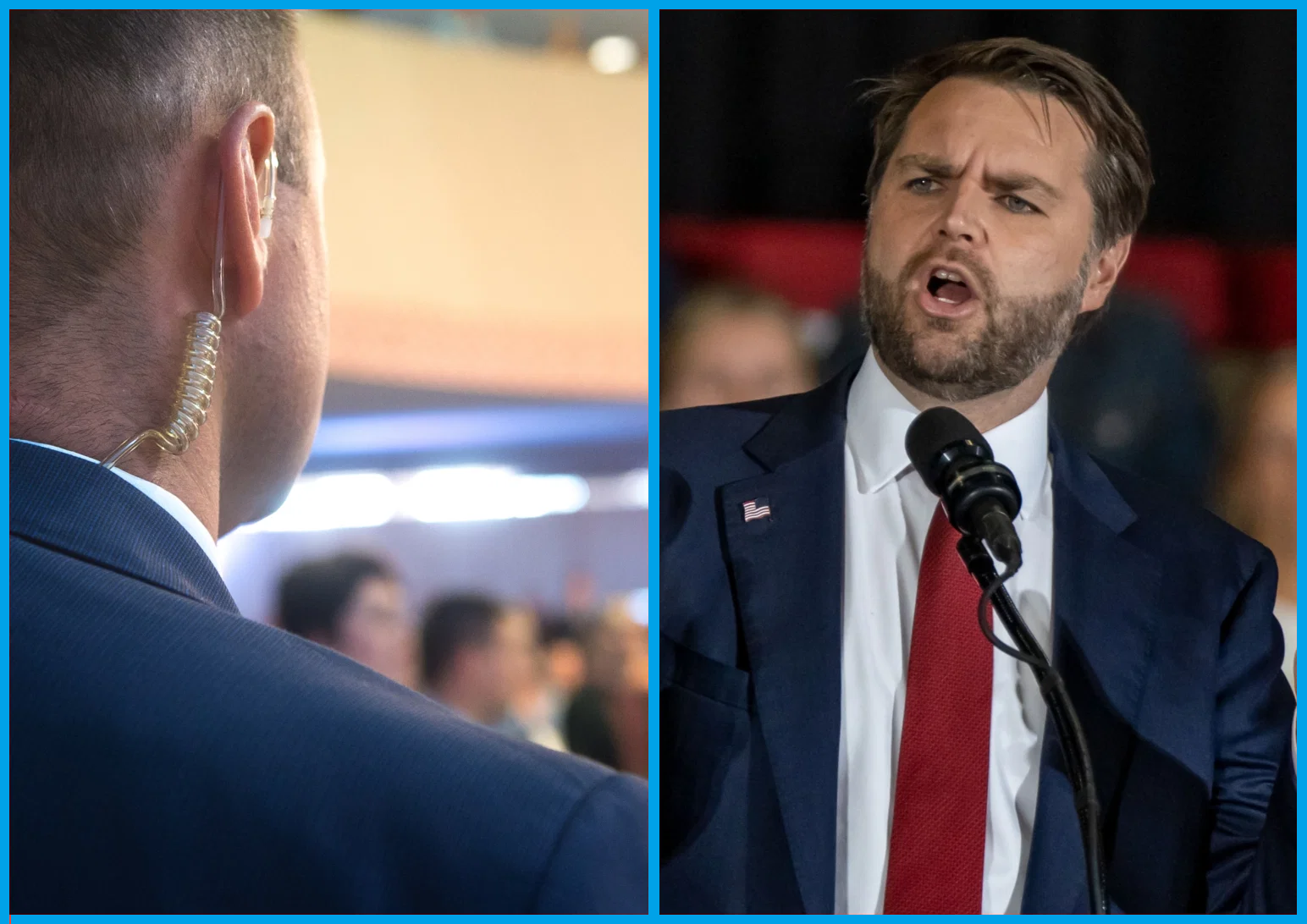
The United States Secret Service is known for operating quietly behind the scenes.
Its agents protect presidents, vice presidents, and their families regardless of politics, often working long hours without public recognition.
That’s why a new report involving Vice President JD Vance has attracted so much attention.
According to multiple reports, some members of Vance’s Secret Service detail have grown increasingly frustrated with his frequent last-minute travel requests and the logistical burden they create. That frustration reportedly became so widespread that agents began producing unofficial coins and stickers joking about their assignments a highly unusual glimpse into internal morale.
@aaronparnas1 7/16
♬ original sound – Aaron Parnas
The “Bobcat OTR Survivors Club”
At the center of the story are commemorative-style challenge coins and stickers reportedly created by agents.
The unofficial items reference Vance’s Secret Service codename, “Bobcat,” along with the phrase “OTR” (Off the Record)—an internal term describing unplanned or last-minute trips that require agents to rapidly reorganize security operations.
According to the reporting, the mock memorabilia jokingly welcomed agents into a so-called “Bobcat OTR Survivors Club,” reflecting the strain that repeated schedule changes allegedly placed on protection teams.
While the coins were reportedly intended as internal humor rather than public criticism, their existence suggests an unusual level of frustration within a service that traditionally avoids public complaints.
What Sparked the Complaints?
The reports describe a pattern of sudden travel requests involving both the vice president and members of his family.
One example that drew particular attention involved plans to use Marine Two, the vice president’s helicopter, so one of Vance’s young sons could attend a golf lesson. According to reports, the trip was ultimately canceled because of bad weather, but agents viewed the request as emblematic of broader concerns over resource use and constantly shifting schedules.
Former and current officials quoted in those reports said the repeated changes required agents to abandon personal plans, rearrange staffing, and absorb additional operational costs with little notice.
Morale, Not Politics
Importantly, the reported frustration is not described as ideological.
Secret Service agents protect elected officials from both major political parties, and the agency emphasizes professionalism regardless of who occupies the office.
Instead, the complaints center on workload, planning, and operational efficiency.
Protective details routinely accommodate unexpected events, but some agents reportedly felt the volume and nature of Vance’s requests exceeded what they had experienced on previous vice-presidential assignments.
The Secret Service Responds
The Secret Service has not publicly disputed that protective work often requires significant flexibility.
In statements cited by several outlets, the agency reiterated that agents accept irregular hours and changing schedules as part of their mission to protect senior government officials.
Vance’s office has also expressed appreciation for the work performed by the Secret Service but has not publicly addressed the specific allegations regarding the coins, stickers, or travel complaints.
Why This Story Matters
At first glance, the controversy might seem like an inside-baseball story about government logistics.
But it raises broader questions about how taxpayer-funded security resources are managed.
Vice presidents are entitled to extensive protection because of the office they hold. That protection naturally extends to immediate family members in many circumstances.
The debate is whether some reported requests crossed the line between legitimate security needs and unnecessary demands on personnel and government resources.
That question—not the existence of security itself is what has fueled public discussion.
Another Challenge for JD Vance’s Public Image
The timing is also significant.
In recent weeks, Vance has faced scrutiny over several unrelated controversies, including a federal lawsuit alleging retaliation against a political critic and continued public criticism stemming from past remarks and social media disputes.
The Secret Service story adds another chapter to a period in which the vice president has increasingly found himself at the center of headlines for reasons unrelated to policy.
Behind Every Public Official Is an Invisible Team
The Secret Service rarely seeks attention.
When its agents become part of the news, it’s usually because something has gone wrong—or because an extraordinary situation has brought normally private operations into public view.
Whether the reports reflect isolated frustrations or a deeper morale issue remains unclear.
What is clear is that the story has shifted attention away from the vice president’s public appearances and toward the people responsible for protecting him.
For an agency built on discretion, that’s an unusual place to be.