
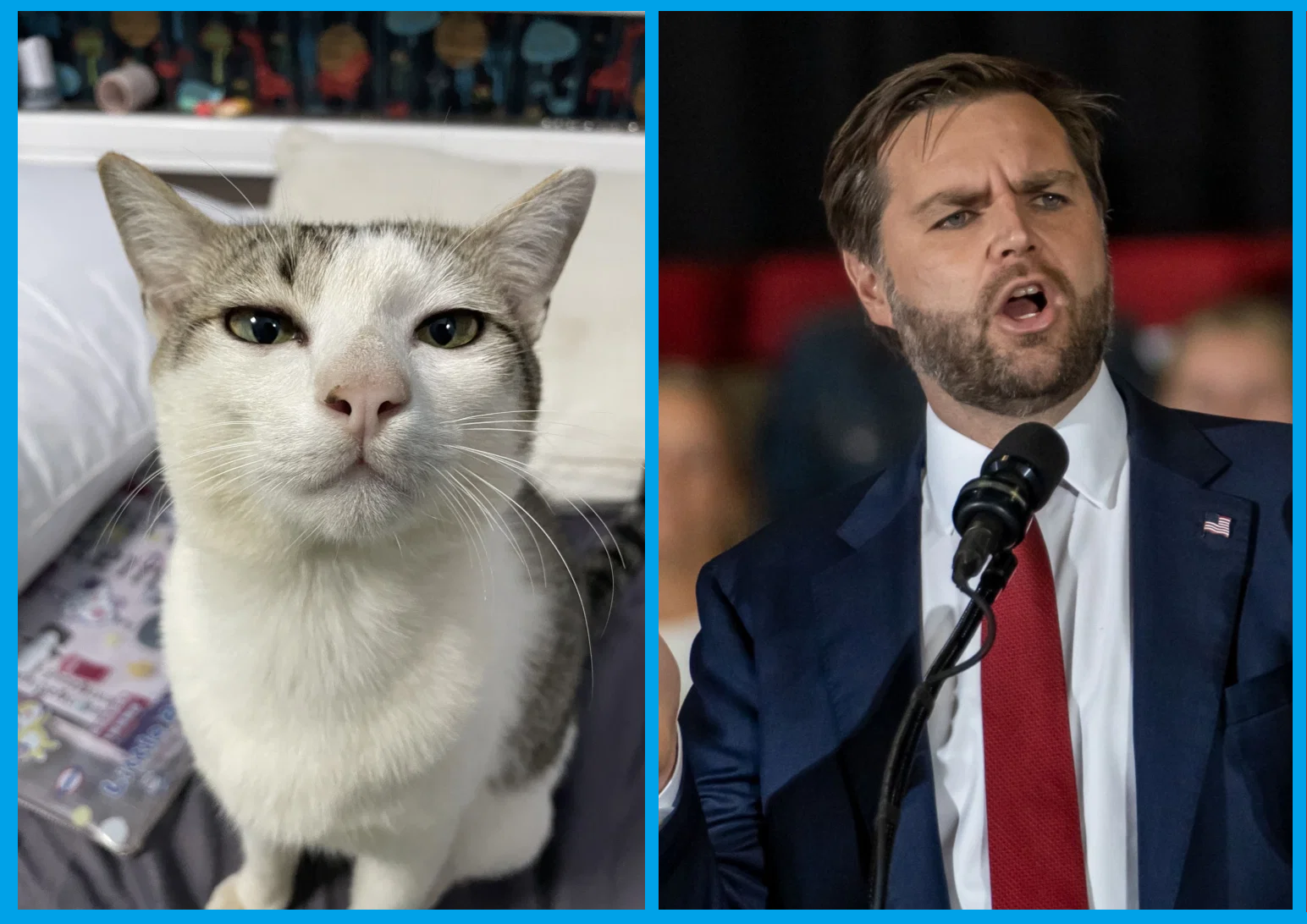
For nearly two years, Amanda McGonigle has run one of the internet’s most unexpectedly influential political meme accounts.
Its premise is simple.
Photos of cats.
Captions poking fun at Vice President JD Vance.
A running mission statement that says the account exists solely to gain more followers than Vance himself.
What began as internet satire has now turned into a constitutional dispute.
McGonigle has filed a federal lawsuit alleging that she was barred from attending a public event featuring the vice president because of her online criticism, arguing that government officials retaliated against her protected political speech in violation of the First Amendment.
@elizaorlins You’re my hero @catsonacouch! Thank you for standing up on behalf of all of us. #couragenow ♬ original sound – Eliza Orlins
From Viral Memes to the Courthouse
McGonigle’s Instagram account, @catsonacouch, exploded in popularity after Vance’s controversial 2024 remarks referring to Democratic leaders as “childless cat ladies.”
She leaned into the joke, posting cats alongside satirical commentary aimed almost exclusively at the vice president.
By 2026, the account had amassed nearly 2 million followers, making it one of the largest political meme pages on Instagram.
According to the lawsuit, McGonigle later registered to attend a public event featuring Vance but says she was denied entry after security personnel identified her as the creator of the viral account.
She argues that the exclusion was based solely on her political expression.
The Lawsuit Centers on the First Amendment
McGonigle isn’t suing because people disliked her jokes.
She’s suing because she says government officials cannot punish citizens for criticizing elected leaders.
The complaint alleges that being singled out because of her online speech violates longstanding First Amendment protections against viewpoint discrimination by government officials.
Civil liberties organizations supporting the case argue that public officials may dislike satire, but they generally cannot deny citizens equal access to public events based on political viewpoints.
Why Cats Became Part of JD Vance’s Political Story
The irony isn’t lost on anyone following the case.
Cats have become deeply intertwined with Vance’s public image ever since his widely criticized “childless cat ladies” comments resurfaced during the 2024 presidential campaign.
The controversy intensified further after Vance amplified false claims about Haitian immigrants eating pets in Springfield, Ohio—a rumor that local officials repeatedly said lacked credible evidence. Even after acknowledging the claims could prove false, Vance encouraged supporters to “keep the cat memes flowing.”
McGonigle’s account transformed that history into a nonstop stream of feline satire.
Supporters Say It’s About More Than Memes
Free speech advocates argue this lawsuit reaches well beyond Instagram humor.
If government officials excluded someone from a public event because they criticized elected leaders online, they say, the precedent could affect journalists, activists, comedians, and ordinary citizens alike.
Organizations backing McGonigle contend that political satire has long occupied one of the strongest protected categories of speech under the First Amendment.
The White House Hasn’t Accepted Her Claims
Government attorneys are expected to challenge McGonigle’s allegations, arguing that security decisions surrounding vice presidential appearances involve operational considerations beyond social media criticism.
The case remains in its early stages, and a court has not yet ruled on the merits of her constitutional claims.
Why This Case Could Matter
Political meme accounts are now among the most influential voices on social media.
Some attract larger audiences than elected officials themselves.
As those creators become increasingly visible, courts are beginning to confront new questions:
- Can public officials restrict access based on online criticism?
- Where is the line between legitimate security decisions and unconstitutional retaliation?
- Do meme creators enjoy the same First Amendment protections as journalists?
The answers could shape future interactions between government officials and digital creators.
A Reminder That Satire Has Always Been Political
Political cartoons once appeared in newspapers.
Today, they appear on Instagram feeds.
The medium has changed.
The constitutional questions remain remarkably similar.
Whether Amanda McGonigle ultimately prevails in court is still uncertain.
But one thing is already clear:
A page dedicated to funny pictures of cats has become the center of a serious debate about free speech, government power, and the rights of Americans to mock their elected officials without fearing retaliation.
For an account built on feline jokes, that’s a surprisingly weighty legacy.