
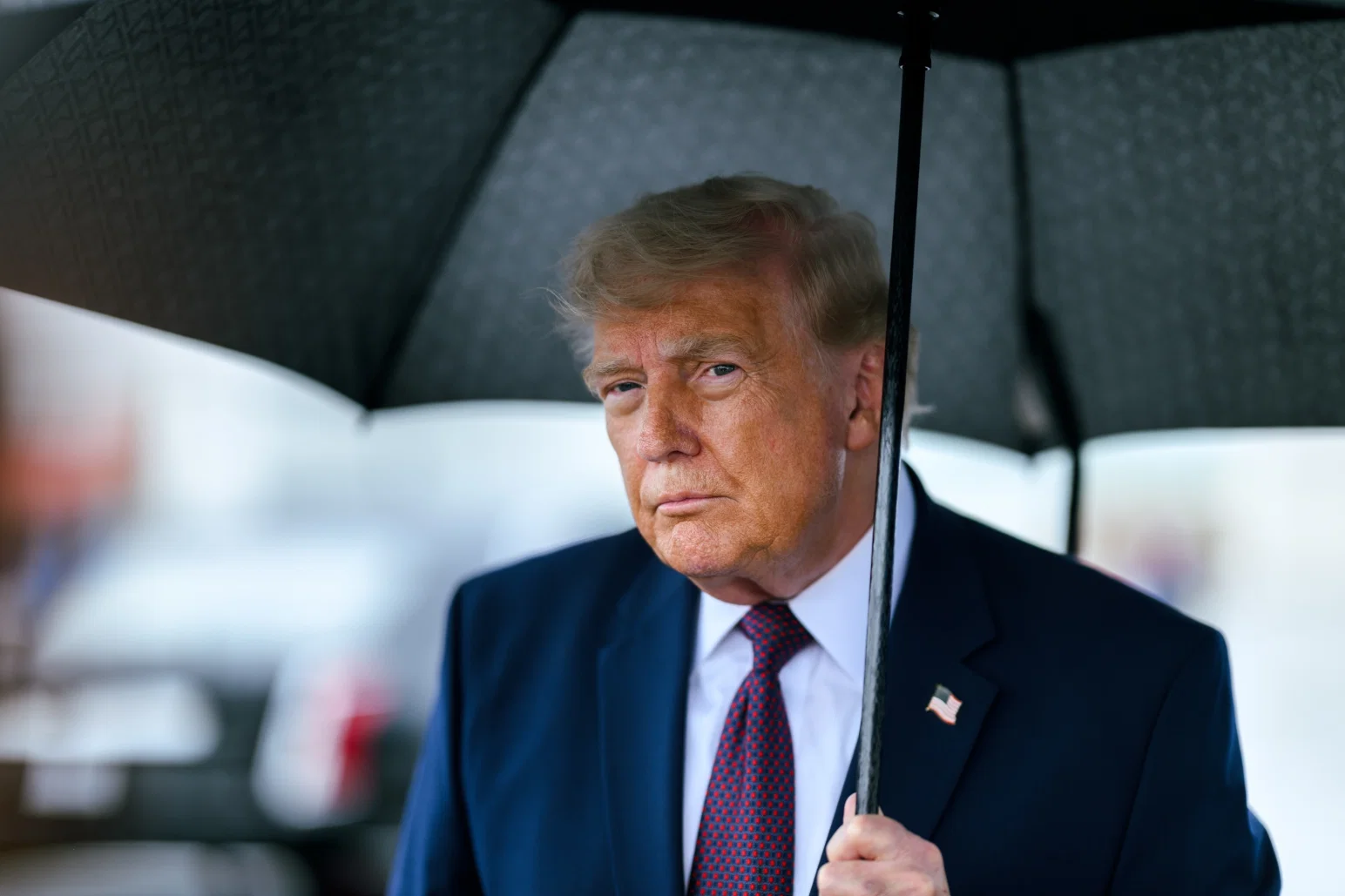
Donald Trump has feuded with judges, journalists, universities, tech companies, Hollywood celebrities, and even members of his own party.
Now, critics say, he has found an unlikely new adversary:
The weather.
A fresh round of comments about weather forecasting and suggestions that weather reporting has become politically biased quickly exploded across social media, inspiring a flood of memes and sarcastic commentary. What might have been a routine complaint instead became one of the internet’s biggest political punchlines of the week.
@aaronparnas1 7/4
♬ original sound – Aaron Parnas
When Politics Meets the Forecast
Weather has become an increasingly visible topic in American politics.
Extreme heat, hurricanes, floods, wildfires, and debates over climate policy have pushed meteorology into the center of political conversations in ways that would have seemed unlikely just a decade ago.
Against that backdrop, Trump’s criticism of weather reporting struck many observers as another example of America’s growing political polarization, where even scientific forecasts can become part of a broader ideological debate.
@jamellebouie of course president trump's fourth of july party was a huge failure
♬ original sound – b-boy bouiebaisse
Social Media Responded Instantly
If there’s one thing the internet loves, it’s an unusual political feud.
Within hours, users on X, Threads, Reddit, and TikTok were posting jokes imagining storms with political affiliations and forecasting maps labeled with partisan slogans.
Among the recurring themes were:
- “woke hurricanes”
- “Democrat thunderstorms”
- “left-wing rain clouds”
- “MAGA sunshine”
- “liberal lightning”
The memes spread far faster than the original comments themselves, turning the story into another viral moment in an already eventful political summer.
Meteorologists Pushed Back
Weather experts were quick to remind the public that forecasts are built on observational data, numerical weather prediction models, and atmospheric science—not political ideology.
Forecasting agencies rely on satellite imagery, radar systems, weather balloons, ocean monitoring, and sophisticated computer models to predict developing conditions.
While forecasts can sometimes be wrong, experts note that forecasting errors are generally the result of the atmosphere’s complexity rather than political influence.
A Familiar Pattern
Political analysts observed that the controversy follows a communication style Trump has employed throughout his political career.
When institutions produce information he disputes, he often challenges not only the conclusions but also the credibility of the institutions themselves.
Over the years that approach has extended to discussions involving:
- election administration
- polling
- intelligence agencies
- federal investigators
- traditional media
- scientific organizations
The latest weather controversy fits into that broader pattern, according to many observers.
Why the Story Resonated
On its surface, arguing about the weather might seem trivial.
But the story gained traction because it combined three ingredients that reliably attract attention online:
- politics
- science
- humor
The result was a story that appealed to supporters, critics, comedians, and meme creators alike.
Weather Has Become Increasingly Political
Although meteorology itself remains a scientific discipline, conversations surrounding weather increasingly intersect with debates over:
- climate change
- disaster preparedness
- environmental regulation
- federal emergency response
- infrastructure investment
Those broader discussions mean even routine weather events can quickly become political talking points.
The Internet Loves Symbolism
One reason this story spread so widely is that weather has long served as a metaphor in politics.
Storms often symbolize crises.
Sunny skies suggest optimism.
Dark clouds hint at uncertainty.
When politicians begin talking about weather in explicitly political terms, it almost guarantees a reaction online.
In this case, many users viewed the comments less as a scientific argument and more as an opportunity for satire.
The Bigger Picture
Whether people interpreted Trump’s remarks as serious criticism, rhetorical exaggeration, or political messaging depended largely on their existing views.
Supporters argued he was expressing frustration with media coverage and forecasting narratives.
Critics viewed the episode as another example of politics spilling into areas traditionally viewed as nonpartisan.
Either way, the conversation extended far beyond meteorology.
Mother Nature Doesn’t Vote
The episode serves as another reminder of how quickly ordinary events can become cultural flashpoints.
Rainstorms don’t cast ballots.
Hurricanes don’t register with political parties.
Forecast models don’t belong to Republicans or Democrats.
Yet in today’s political environment, even the weather can become the center of a national debate.
And if the internet’s reaction is any indication, this may be one of the few political battles where Mother Nature emerged with the clear public-relations victory.