
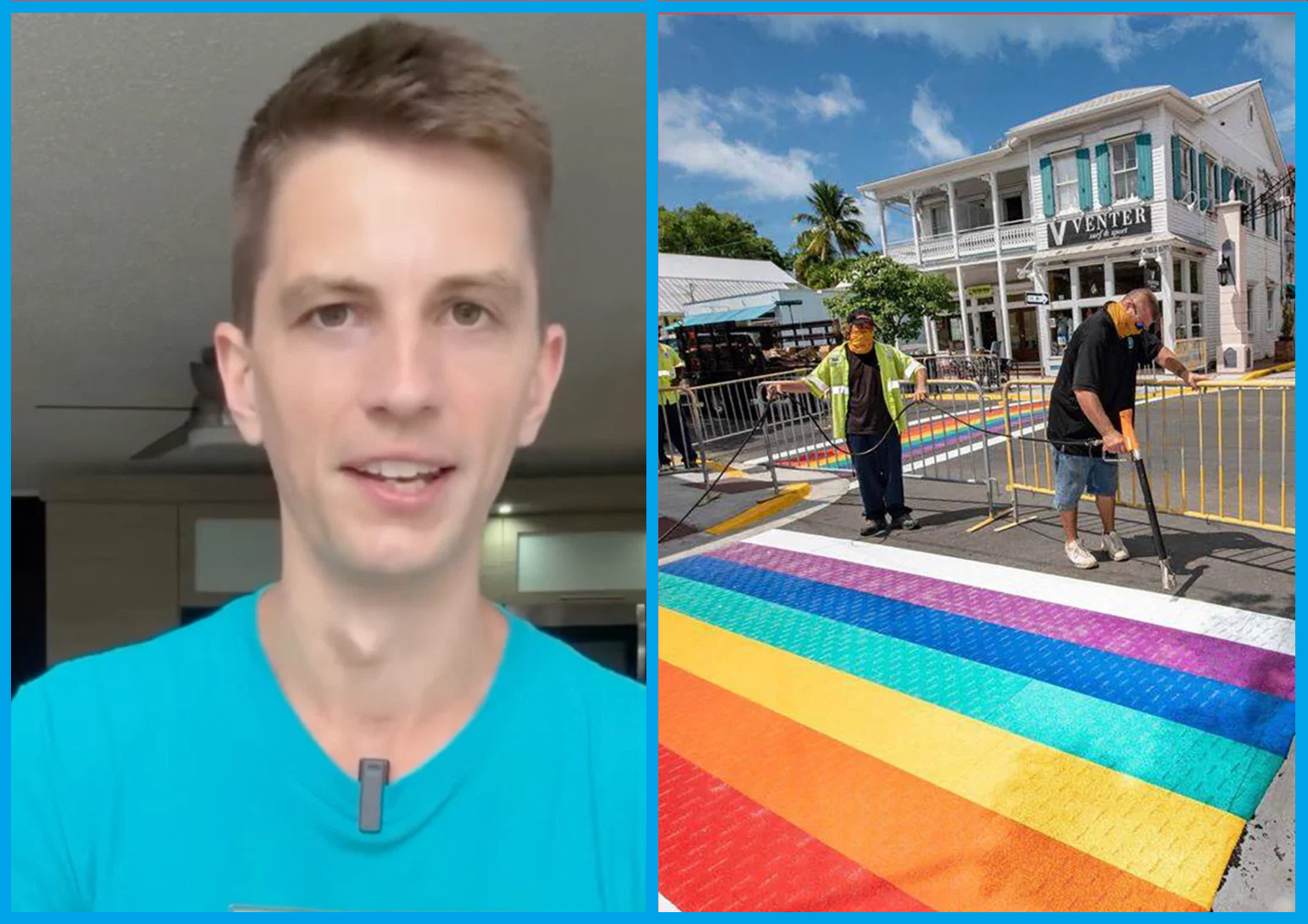
It’s a question more LGBTQ travelers are asking as political divisions continue to shape travel decisions across the United States.
With numerous states passing or debating laws affecting LGBTQ rights in recent years, some travelers have chosen to avoid certain destinations altogether. Others argue that boycotts may unintentionally hurt the very LGBTQ communities they aim to support.
A recent Queerty discussion explored that tension, with one experienced traveler making the case that queer people shouldn’t automatically write off entire states because of their politics.
States Are More Complicated Than Their Politics
One of the central arguments is simple:
A state’s government is not the same thing as its people.
Even in deeply conservative states, there are thriving LGBTQ communities, inclusive businesses, affirming organizations, and local advocates working every day to make life better for queer residents.
Cities such as Austin, Atlanta, Nashville, and New Orleans have vibrant LGBTQ cultures despite existing within states that often receive criticism from LGBTQ advocacy groups.
Boycotts Have a Long History
Travel boycotts are not new.
Over the years, advocacy organizations have encouraged travelers to avoid destinations over concerns involving:
- LGBTQ rights
- racial discrimination
- voting rights
- labor practices
- human rights issues
Supporters argue that economic pressure can influence policy decisions and send a strong message to political leaders.
Critics counter that tourism boycotts often impact local workers, small businesses, and marginalized communities more than elected officials.
Local LGBTQ Businesses Often Feel the Impact
One point raised repeatedly by travelers is that queer-owned businesses in conservative states often depend heavily on tourism.
These businesses may include:
- bars
- restaurants
- bookstores
- community spaces
- tour companies
- event organizers
When LGBTQ travelers avoid entire regions, those local establishments can experience financial consequences even though they actively support the community.
That’s why some advocates encourage visitors to spend intentionally rather than avoid destinations entirely.
Travel Can Be a Form of Visibility
Another perspective focuses on visibility.
Some LGBTQ travelers view visiting conservative areas as a way of:
- supporting local communities
- creating connections
- challenging stereotypes
- demonstrating solidarity
For residents living in areas with limited LGBTQ visibility, seeing queer visitors openly enjoying local attractions can sometimes feel meaningful.
Travel becomes more than recreation it becomes community building.
Safety Still Matters
Of course, none of this means travelers should ignore legitimate safety concerns.
When planning any trip, LGBTQ travelers often consider:
- local laws
- community attitudes
- available resources
- neighborhood reputation
- event-specific risks
Organizations such as Human Rights Campaign and Equality Federation regularly publish information that helps travelers make informed decisions.
Research remains important.
Not Every Traveler Has the Same Comfort Level
The debate also reflects a simple reality:
People have different risk tolerances.
Some LGBTQ travelers feel comfortable visiting nearly any destination.
Others prefer locations with strong legal protections and visible LGBTQ infrastructure.
Neither approach is inherently wrong.
Travel decisions often depend on:
- personal experience
- identity
- family situation
- safety concerns
- comfort level
What feels empowering to one traveler may feel stressful to another.
The Economic Argument Is Complicated
One of the strongest arguments against blanket boycotts is economic.
Many LGBTQ-friendly cities exist within politically conservative states.
Money spent at:
- local hotels
- queer-owned businesses
- LGBTQ events
- independent restaurants
may directly support communities that share travelers’ values.
That reality makes the decision more nuanced than a simple red-state versus blue-state calculation.
Queer Communities Exist Everywhere
Perhaps the most important point raised by supporters of red-state travel is that LGBTQ people live everywhere.
There are queer communities in:
- small towns
- suburban neighborhoods
- conservative regions
- rural counties
- major cities
Reducing entire states to political stereotypes can sometimes erase the experiences of LGBTQ residents who call those places home.
The Debate Probably Won’t End Soon
As political polarization continues, conversations about ethical travel choices will likely become even more common.
Some travelers will continue choosing destinations based on local laws and policies.
Others will prioritize supporting LGBTQ communities wherever they find them.
Both perspectives are rooted in a desire to strengthen queer communities, even if they lead to different conclusions.
So, Should LGBTQ Travelers Visit Red States?
The answer ultimately depends on individual priorities.
For some people, avoiding states with anti-LGBTQ policies feels like a necessary act of solidarity.
For others, visiting those states and intentionally supporting local LGBTQ communities—feels equally important.
What most people seem to agree on is this:
Queer people exist everywhere.
And many of them are working hard to build welcoming communities regardless of the political climate around them.