
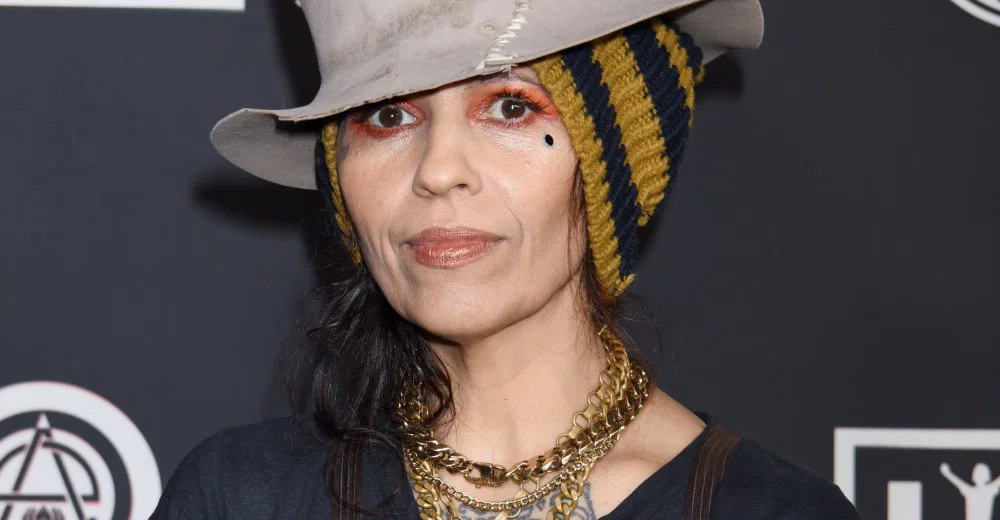
That’s the part of the story that still sounds strange.
Today, “Beautiful” is inseparable from Christina Aguilera. The 2002 ballad became one of the defining songs of her career, eventually reaching No. 2 on the Billboard Hot 100 and earning Perry a Grammy-winning performance from Aguilera. More importantly, its message of self-acceptance turned it into a beloved LGBTQ+ anthem.
But when Linda Perry first played the song for Aguilera, Perry wasn’t convinced she was the right person to sing it.
In a recent interview, Perry admitted that her initial reaction was essentially: She’s a glamorous pop star. Why would she understand this song?
What happened next changed both women’s careers—and helped transform an intensely personal song into something millions of people could call their own.
Perry Wrote the Song From a Place of Pain
“Beautiful” wasn’t originally conceived as a perfectly polished pop anthem.
Perry has explained that she wrote it while confronting her own feelings of insecurity and inadequacy. In footage from her documentary, she recalled sitting at the piano, playing chords and developing the song almost spontaneously.
When she listened back to what she’d written, she cried.
The reason was painfully simple: telling herself that she was beautiful didn’t feel true. The song was effectively an argument with the negative voice in her own head.
That emotional contradiction became the song’s power.
It wasn’t written from a place of certainty.
It was written by someone struggling to believe the message she was singing.
Then Christina Aguilera Walked Into the Room
Aguilera was already a major pop star when she met Perry.
She had the voice. She had the record sales. She had the image.
But Perry saw an apparent mismatch between Aguilera’s glamorous public persona and the emotional vulnerability required for “Beautiful.”
In an earlier interview, Perry recalled being shocked when Aguilera immediately asked to record a demo after hearing the song. Perry said she had believed the song represented her own experience of feeling unattractive and insecure, while Aguilera appeared to have everything the world considered beautiful.
Then Perry noticed something important.
Aguilera was nervous.
Very nervous.
And suddenly, the contradiction disappeared.
Perry Realized Aguilera Understood the Song
The pop star’s appearance wasn’t the point.
Her insecurities were.
Perry came to understand that Aguilera could embody the song precisely because being perceived as beautiful doesn’t automatically make someone feel beautiful.
That realization changed Perry’s thinking.
As Perry later put it, Aguilera was an “insecure power girl”—someone who could project enormous confidence while still struggling internally.
And that tension is exactly what makes the recording work.
The Most Important Decision Wasn’t About the Song. It Was About the Voice.
Perry made another unconventional choice during the recording process.
She kept Aguilera’s original demo vocal.
Rather than replacing it with a more polished studio performance, Perry believed the imperfections were essential to the emotional impact.
Aguilera had reportedly wanted to rerecord parts of the song, but Perry resisted because the first take contained something technical perfection couldn’t reproduce: vulnerability.
The breath.
The uncertainty.
The feeling that Aguilera was actually discovering the words as she sang them.
Perry has described that raw recording as the reason the performance connects so deeply with listeners.
It was a gamble.
It worked.
The Song Became Bigger Than Either of Them Expected
“Beautiful” was released on Aguilera’s 2002 album Stripped.
It became a major worldwide hit, earned a Grammy for Best Female Pop Vocal Performance, and developed a cultural life far beyond the pop charts.
For LGBTQ+ listeners in particular, the song’s message of rejecting shame and accepting yourself resonated deeply.
That wasn’t entirely predictable.
Perry has said she knew the song was special when Aguilera recorded it, but she didn’t anticipate how strongly it would resonate with LGBTQ+ audiences.
That’s one of the remarkable things about songwriting.
A songwriter can write from one person’s pain.
The audience can turn it into a million people’s survival anthem.
Why “Beautiful” Became a Queer Classic
The song arrived at a particularly important moment in pop culture.
For young LGBTQ+ listeners, the central message—that the cruel things people say about you don’t determine your worth—could feel profoundly personal.
The song also arrived during an era when mainstream pop stars were only beginning to embrace LGBTQ+ audiences so openly.
Aguilera’s recording didn’t require listeners to disclose their identities.
It simply offered them permission to reject shame.
That universality helped the song travel far beyond its original context.
Perry Recently Recorded It Herself
After years of the world identifying “Beautiful” with Aguilera, Perry eventually recorded her own version.
Her 2026 album Let It Die Here includes a new rendition that carries a different emotional meaning. Perry has explained that revisiting the song decades later made her think about her relationship with her late mother and the hurtful words she experienced growing up.
The perspective has changed.
The song hasn’t.
What once sounded like a songwriter trying to convince herself she deserved love can now sound like someone looking back and realizing how much she survived.
Perry Isn’t Trying to Take the Song Back From Christina
That’s another important part of the story.
With Perry now performing “Beautiful” herself, it would be easy to frame the situation as a songwriter reclaiming a song that became famous through someone else.
Perry rejects that interpretation.
In a recent interview, she praised Aguilera for understanding the song and making it her own. Perry said she isn’t trying to suggest her recording is the “correct” version. Instead, she’s simply singing a song she wrote decades ago from the perspective of the person she has become.
That’s a strikingly generous way to look back at a song that changed her career.
The Imperfect Version Was the Perfect Version
There’s a larger lesson hiding inside the history of “Beautiful.”
The song’s success wasn’t built on technical perfection.
It was built on emotional credibility.
Perry was willing to leave imperfections in the vocal.
Aguilera was willing to let listeners hear vulnerability behind the superstar image.
And audiences responded because they recognized something real.
Even the most polished pop stars can feel insecure.
Even people everyone calls beautiful can hate what they see in the mirror.
Even a songwriter who knows exactly what to say may struggle to believe the words herself.
More Than 20 Years Later, “Beautiful” Still Works
Pop changes quickly.
Songs disappear.
Trends fade.
But some songs survive because they describe something that doesn’t go out of date.
“Beautiful” is one of those songs.
Its message doesn’t depend on a particular hairstyle, chart position, celebrity feud, or pop era.
It simply asks listeners to consider the possibility that the voices telling them they’re worthless might be wrong.
And perhaps that’s why Linda Perry’s original hesitation makes the story even more powerful.
She wasn’t sure Christina Aguilera could sing the song.
Then she heard the vulnerability beneath the superstar.
And realized that was exactly why she could.
“Beautiful” wasn’t powerful because Christina Aguilera looked like she had everything figured out. It was powerful because, underneath all of that glamour, she didn’t feel that way either.
That’s the truth Linda Perry says she finally recognized and it’s the reason the song still belongs to so many people more than two decades later.