
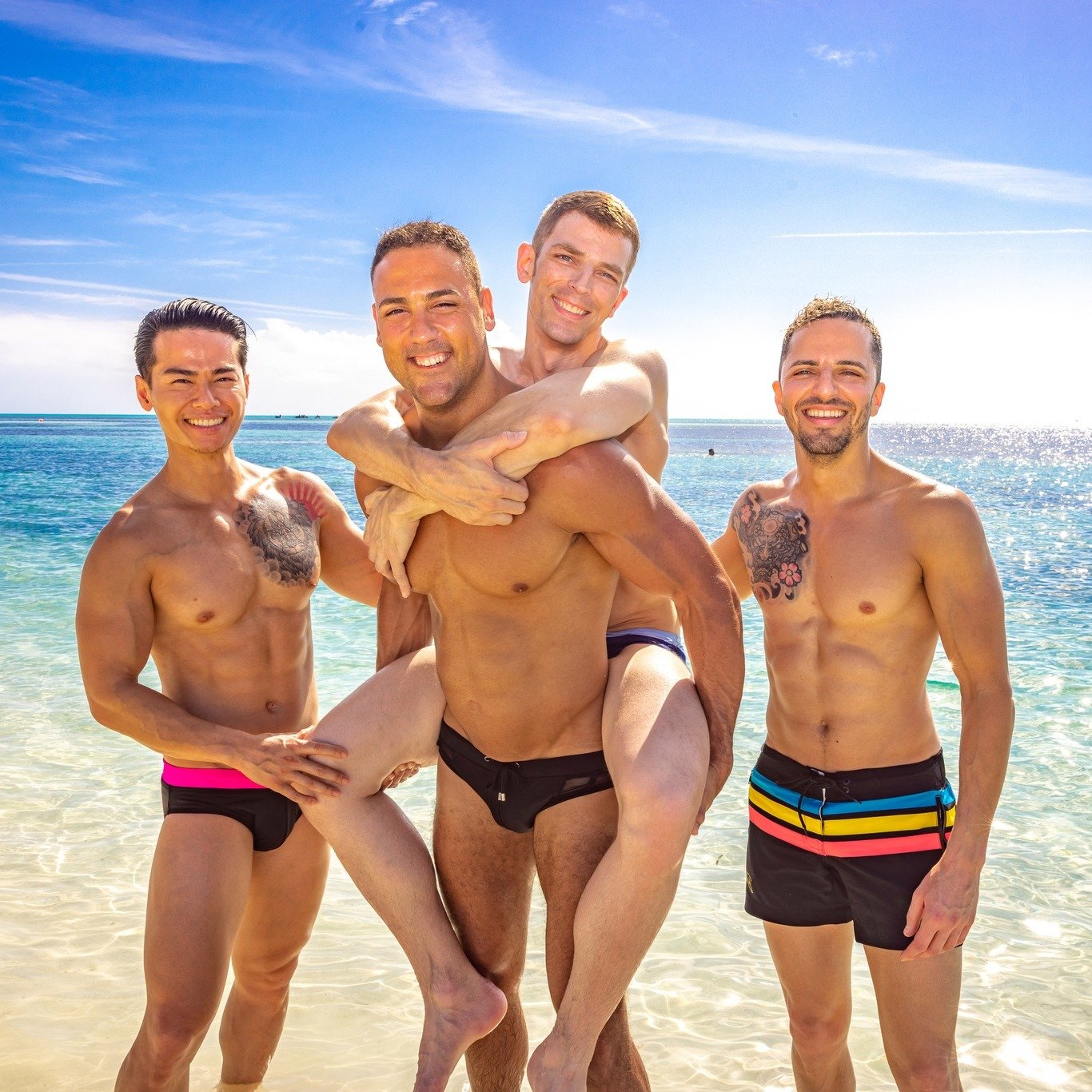
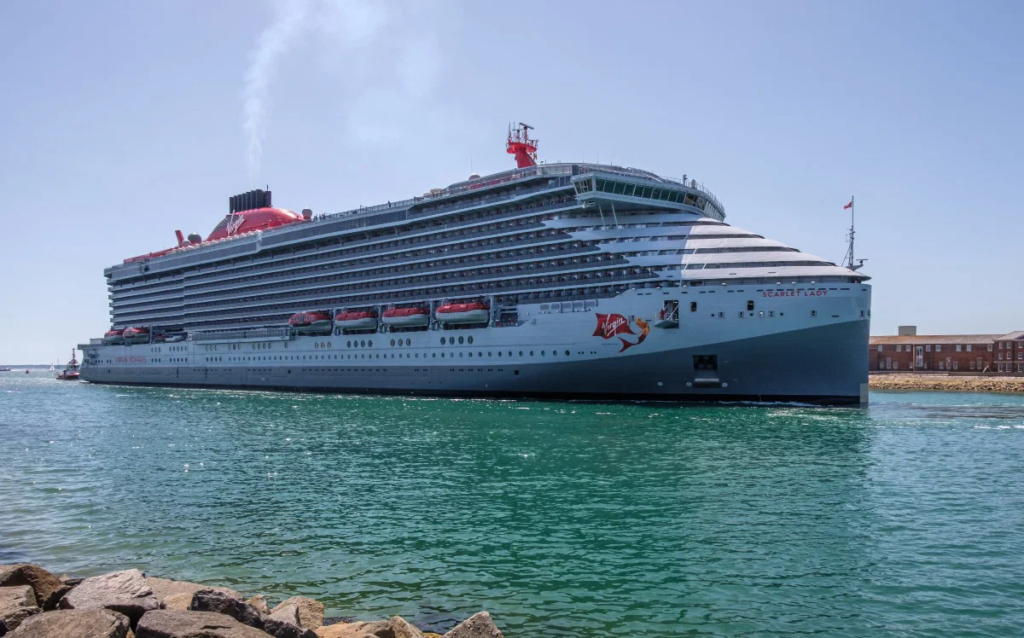
Passengers aboard the Scarlet Lady expected to spend the day exploring one of the world’s oldest civilizations.
Many had booked excursions to the Pyramids of Giza, the Egyptian Museum, and the streets of Cairo after Egypt was added to the itinerary as a replacement stop.
Instead, they woke before sunrise to a letter slipped beneath their cabin doors.
Their stop in Alexandria had been canceled.
The ship had been denied entry into Egyptian waters, leaving nearly 2,000 passengers to watch the country’s coastline from a distance before turning back into the Mediterranean.
For many aboard, it was an unsettling case of déjà vu.
Just days earlier, Turkey had already refused to allow the same LGBTQ+-chartered cruise to dock, forcing organizers to rewrite the voyage once before it had even reached Egypt.
The Second Rejection Came Without Warning
According to Atlantis Events, the company that chartered the voyage aboard Virgin Voyages’ Scarlet Lady, Egyptian authorities revoked permission only hours before the scheduled arrival.
CEO Rich Campbell told passengers the decision came as a complete surprise.
The company noted it had successfully operated nearly identical itineraries in Egypt in previous years without incident and had already arranged more than a thousand shore excursions through local tour operators.
Unlike Turkey, Egyptian officials did not immediately provide a public explanation for refusing entry.
First Turkey. Then Egypt.
The voyage was originally designed as a 10-day Mediterranean cruise departing Athens and ending in Venice.
Its planned highlights included stops in Kuşadası and Istanbul, two of Turkey’s most popular cruise destinations.
But before the ship arrived, Turkish officials canceled both visits, stating that the chartered LGBTQ+ group represented behavior “incompatible with our society’s moral values.”
Organizers quickly substituted Alexandria, Egypt, hoping to salvage the itinerary.
That plan collapsed as well.
By Thursday morning, passengers had learned that Egypt would not allow the ship to enter its waters either.
Travelers Lost More Than a Port Stop
For many passengers, the disappointment wasn’t simply about missing another destination.
Some had spent months planning bucket-list experiences in Egypt.
Tours to the pyramids, ancient temples, and museums had already been booked and paid for.
Journalist Randy Slovacek, who was aboard the cruise, described the atmosphere as one of genuine disbelief after travelers discovered the overnight notice announcing the cancellation.
Instead of stepping onto Egyptian soil, guests watched the itinerary change yet again while the ship searched for another destination.
Performers and Guests Spoke Out
The cruise also featured several entertainers, including Broadway legend Patti LuPone, who had already criticized Turkey’s earlier decision to block the voyage.
Following Egypt’s refusal, comedian Brad Loekle, another performer onboard, described the experience as painful and symbolic of what he sees as increasing hostility toward LGBTQ+ travelers around the world.
Atlantis Events emphasized that its cruises are designed as leisure vacations rather than political demonstrations, arguing that passengers simply wanted to experience local culture and tourism.
A Growing Question About LGBTQ+ Tourism
The back-to-back refusals have sparked broader questions within the travel industry.
Atlantis Events has operated LGBTQ+ cruises for more than three decades and says this is the first time a voyage has been denied entry by multiple countries during the same trip because of concerns related to the identity of its passengers.
Travel advocates worry the incident could encourage similar restrictions elsewhere, while others caution against assuming the decisions reflect the attitudes of every citizen in those countries rather than those of government authorities.
The Voyage Continued But the Story Changed
Rather than ending the cruise, organizers rerouted the ship once again, replacing Egypt with alternative destinations in the Mediterranean, including stops in Crete and later Montenegro.
The vacation continued.
But by then, the itinerary was no longer the biggest story.
Instead, the cruise had become an international symbol in the ongoing conversation about LGBTQ+ rights, tourism, and how governments choose who is welcome within their borders.
For many passengers, the destinations they missed may eventually fade into memory.
The experience of being turned away twice because of who they were traveling with is far less likely to be forgotten.