
Every long-term relationship eventually reaches a crossroads.
Sometimes it’s about marriage.
Sometimes it’s about children.
Sometimes it’s about where to live.
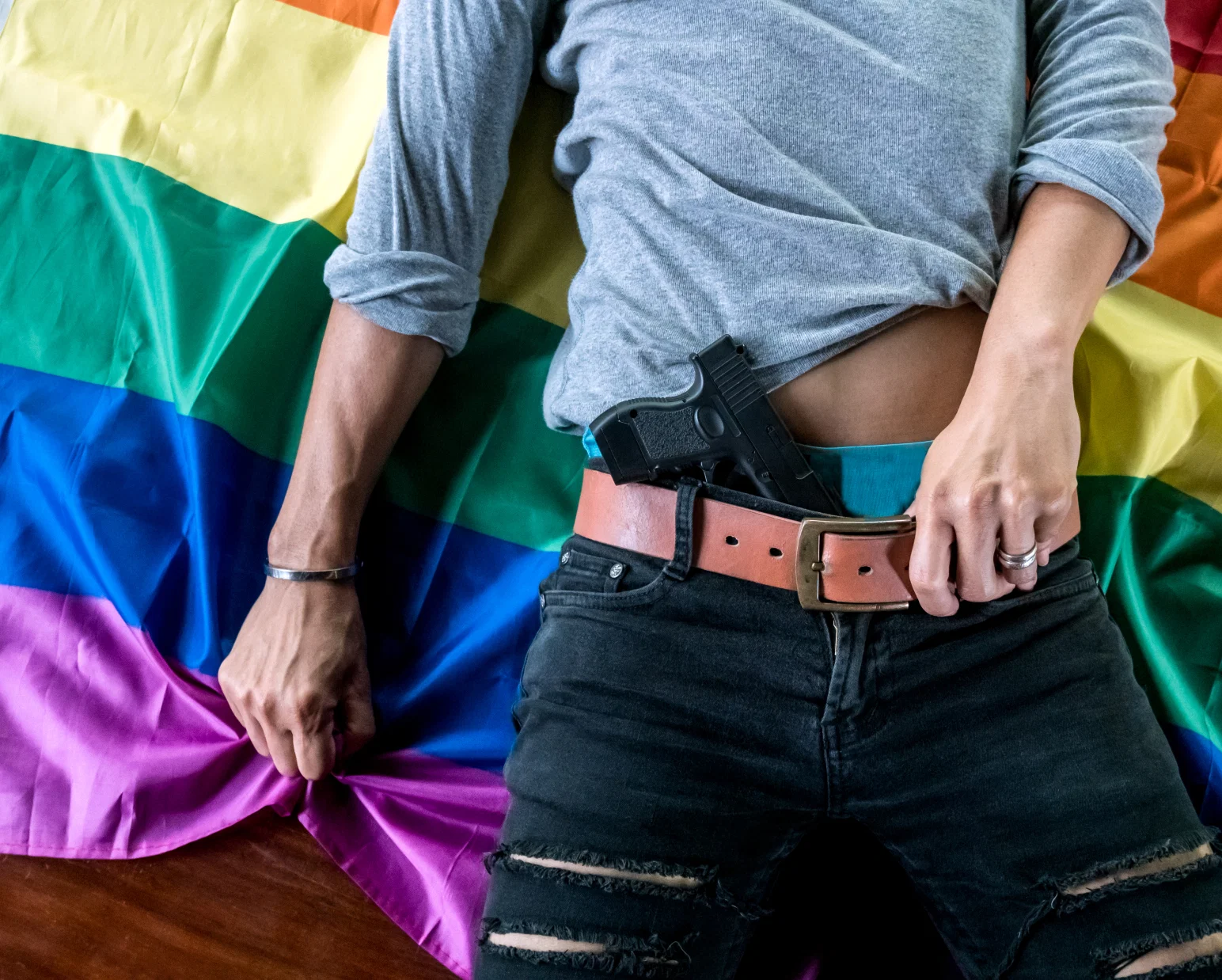
For one gay couple, the issue threatening to unravel years of love is much smaller—but potentially far more dangerous.
A handgun.
One partner believes keeping a firearm at home is simply responsible in an increasingly unpredictable world.
The other believes bringing a gun into the apartment would introduce the very danger they’re trying to avoid.
It’s a disagreement that doesn’t end when the conversation does.
It sits quietly between them every day, raising a larger question:
What happens when two people define “safety” in completely different ways?
The Same Goal, Completely Different Solutions
What’s striking is that neither partner wants conflict.
Both want exactly the same thing:
To come home safely every night.
But they arrive at opposite conclusions.
One believes that if someone breaks into the house, a firearm could save their lives.
The other worries that introducing a gun into the home creates new risks that simply didn’t exist before.
Neither position comes from fear alone.
Both come from wanting to protect the person they love.
Why This Argument Feels So Personal
Gun ownership isn’t like arguing about paint colors or vacation plans.
A firearm changes the environment of a home.
Once it’s there, every guest, every family member, every future child, every emergency, and every disagreement exists alongside it.
That’s why conversations about firearms often become conversations about:
- trust
- responsibility
- anxiety
- personal history
- risk tolerance
- shared values
You’re no longer debating an object.
You’re debating how you see the world.
What Does “Safe” Actually Mean?
Ask ten people what makes them feel safe, and you’ll probably hear ten different answers.
Some people feel secure knowing they have the ability to defend themselves if the worst happens.
Others feel safest knowing lethal weapons aren’t present in their living space.
Neither feeling is imaginary.
Safety isn’t only about statistics.
It’s also about psychology.
If one partner constantly feels anxious because a firearm is in the house, has the home actually become safer for both people?
The Relationship Problem Is Bigger Than the Gun
Couples therapists often point out that recurring arguments rarely stay focused on the original topic.
A disagreement about firearms can quietly become a disagreement about something deeper:
- “Do you trust my judgment?”
- “Do you respect my fears?”
- “Will you make major decisions without me?”
- “Whose comfort matters more?”
Those questions are much harder to answer than simply deciding whether to purchase a handgun.
Can Couples Find Middle Ground?
Sometimes they can.
Some couples choose secure storage with biometric safes and strict handling rules.
Others agree that firearms remain outside the home but explore alternative safety measures, such as improved locks, alarm systems, pepper spray where legal, or self-defense training.
Others conclude that there simply isn’t a compromise because one person’s sense of security fundamentally undermines the other’s.
Every relationship has different boundaries.
LGBTQ People Face Unique Safety Concerns
For many LGBTQ couples, conversations about self-defense can carry additional emotional weight.
Hate crimes, harassment, and discrimination remain genuine concerns in many communities.
Some queer people view firearm ownership as an important form of personal protection.
Others believe community support, awareness, and non-lethal safety strategies provide better long-term security.
Those different perspectives can coexist—even within the same relationship.
The Hardest Question
Imagine two futures.
In one, the gun stays.
One partner sleeps better.
The other sleeps worse.
In the second, the gun never enters the home.
The roles reverse.
Neither outcome feels like a victory.
That’s why arguments like this often last months instead of days.
There isn’t an obvious “correct” answer.
Only competing ideas of what love should look like when fear enters the room.
Is This a Dealbreaker?
It can be.
Not because of politics.
Not because of ideology.
But because deeply held beliefs about safety, trust, and shared responsibility often become part of a couple’s foundation.
If neither person can genuinely live with the other’s decision, resentment may eventually replace compromise.
The healthiest outcome isn’t necessarily convincing someone to change their mind.
It’s making sure both partners fully understand why the other feels the way they do.
Love Requires More Than Agreement
Relationships don’t survive because two people agree on everything.
They survive because they learn how to navigate the disagreements that matter most.
Whether the answer is a firearm, a home security system, self-defense training, or simply more honest conversations, the real challenge isn’t deciding what’s in the nightstand.
It’s deciding whether both people can continue feeling emotionally and physically safe in the same home.
Because in the end, the strongest protection any relationship has isn’t what’s locked in a safe.
It’s whether both partners still believe they’re protecting each other.