
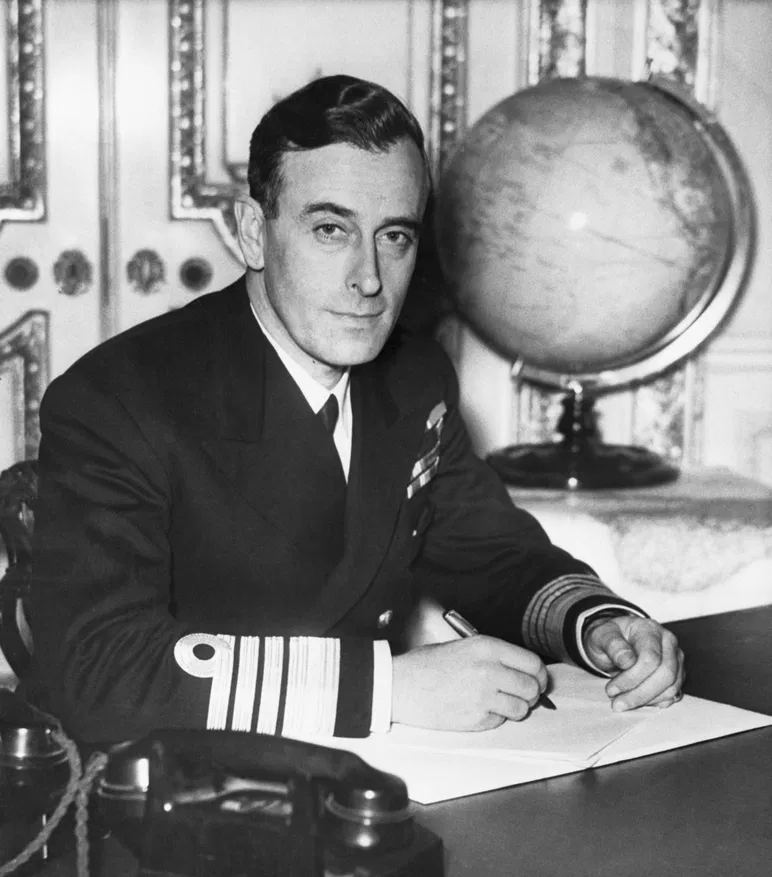
A Royal With a Scandalous Reputation
Lord Louis Mountbatten, a great-grandson of Queen Victoria and uncle to Prince Philip, was one of the most fascinating and controversial figures connected to the British royal orbit in the 20th century. A naval officer, statesman, and royal mentor, Mountbatten lived a life filled with diplomacy, war, and political intrigue. Yet beyond his public achievements, persistent rumors about his private life have continued to fascinate historians and biographers.
Among the most sensational claims is that his alleged relationships and social circles were so unconventional for the time that they drew the attention of U.S. intelligence agencies in the 1950s. While many details remain debated, Mountbatten’s reputation as a charismatic and unconventional royal has endured for decades.
@conmujfnv27 Lord Louis Mountbatten Was England's Worst Royal Failure #history ♬ original sound – conmujfnv27
A Royal Life Beyond Convention
Mountbatten’s marriage to Edwina Mountbatten was famously unconventional. Both were well-known for maintaining close friendships and relationships outside their marriage, and many biographers describe their partnership as open by the standards of their social circle.
Accounts from historians and contemporaries suggest that Mountbatten moved comfortably among artists, writers, and cultural figures of the time, including individuals associated with queer social circles. In elite European and British society, especially before the decriminalization of homosexuality in 1967, such relationships were often discreet and hidden behind layers of privilege and secrecy.
These dynamics have made it difficult for historians to separate confirmed facts from rumor. Still, Mountbatten’s personal life has remained a subject of intense speculation and scholarly interest.
Why the FBI Took Notice
During the Cold War, intelligence agencies closely monitored high-profile international figures. Any personal scandal, particularly involving sexuality, could potentially be used for blackmail or political leverage.
Because of Mountbatten’s global influence and high-ranking military and diplomatic roles, his social life reportedly attracted the attention of U.S. intelligence officials. FBI documents from the era mention rumors and allegations surrounding his relationships and associations.
The existence of such files does not necessarily confirm the accuracy of the claims within them. Intelligence agencies often collected unverified information as part of broader surveillance efforts. Still, the very fact that Mountbatten appeared in intelligence discussions illustrates how seriously governments treated personal scandals during that era.
Mountbatten’s Social Circle and Cultural Influence
Mountbatten moved within elite artistic and political circles that included writers, performers, and public figures known for pushing social boundaries. He maintained friendships with influential cultural figures and frequently attended high-society gatherings across Europe and beyond.
Biographers describe him as charismatic, socially adventurous, and deeply connected to networks of power. These connections made him both influential and controversial, particularly during decades when public attitudes toward sexuality were far more restrictive.
Rumors, Allegations, and Historical Debate
Over the years, numerous claims about Mountbatten’s personal life have surfaced in biographies, memoirs, and media reports. Some describe him as bisexual and socially adventurous, while others frame these stories as exaggerated or politically motivated.
Historians continue to debate:
- how much of the gossip surrounding him was true
- how much was shaped by the era’s tabloid culture
- whether intelligence files amplified rumors without confirmation
Because many primary sources remain private or contested, Mountbatten’s personal life sits at the intersection of documented history and unresolved speculation.
The Cultural Context of the 1950s and 1960s
Understanding Mountbatten’s story requires looking at the cultural climate of mid-20th-century Britain. For much of his life, same-sex relationships between men were illegal in the United Kingdom. Public exposure could destroy reputations and careers.
This environment encouraged secrecy and fueled gossip about prominent figures. Elite individuals often navigated complex private lives while maintaining carefully managed public images.
When homosexuality was partially decriminalized in England and Wales in 1967, social attitudes began shifting. But for many figures of Mountbatten’s generation, decades of secrecy had already shaped public perception.
Legacy and Lasting Fascination
Lord Mountbatten’s legacy remains complex. He played major roles in British naval history, the transition of India to independence, and royal family mentorship. At the same time, stories about his personal life continue to attract attention.
His death in 1979, after being assassinated by the IRA, cemented his place in history as a significant but controversial figure. In the years since, biographies and archival releases have kept interest alive in both his public achievements and private reputation.
Whether viewed as an adventurous socialite, a misunderstood historical figure, or a mix of both, Mountbatten remains one of the most intriguing personalities connected to modern royal history.
Final Thoughts
The rumors and intelligence files surrounding Lord Mountbatten reflect a time when personal lives were often politicized and scrutinized. His story highlights how power, secrecy, and social norms intersected during the mid-20th century.
While many details remain debated, the fascination with Mountbatten’s life endures because it sits at the crossroads of royalty, politics, and cultural change. His story offers insight into how personal reputation and global influence could collide in an era defined by secrecy and surveillance.