
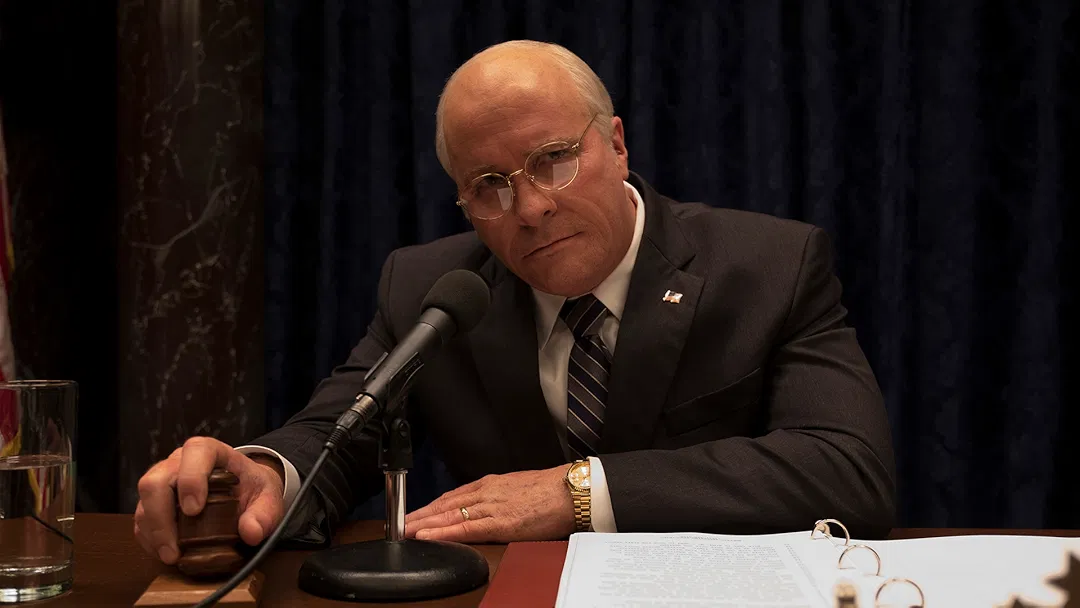
A Nation Reacts to a Polarizing Death
As America processed the news that former Vice President Dick Cheney had died at age 84 from health complications, the country felt a strange mix of reflection and relief. It was the same day Democrats celebrated sweeping local victories, including the historic win of Zohran Mamdani, a progressive and outspoken LGBTQ+ ally who became New York City’s newest mayor.
But amid the political optimism came the reminder of one of America’s darkest political architects, a man who wielded power like a scalpel and a hammer all at once.
The Architect of a Controversial Era
From 2001 to 2009, Cheney served under President George W. Bush, shaping U.S. foreign policy in ways that would define a generation. He championed the “War on Terror”, justified the invasion of Iraq on pretenses, and quietly authorized torture tactics that would later horrify the world.
In another country, he might’ve faced a war crimes tribunal. But this was America, a place where power often buries accountability.
A Paradox in Human Form
What makes Cheney fascinating, however, isn’t just the scale of his political influence; it’s the contradiction within him. Despite his reputation as a hawkish conservative, Cheney was one of the few top Republicans to express support for same-sex marriage or, more accurately, to frame it as a “states’ rights issue.”
That tolerance seemed rooted in something deeply personal: his daughter, Mary Cheney, a proud lesbian who had been in a long-term relationship with another woman.
For a moment, it looked as if Cheney might be an unlikely ally in the conservative movement. Spoiler: that didn’t last.
Enter Vice Adam McKay’s Political Fever Dream
The 2018 biopic Vice, directed by Adam McKay (of The Big Short and Succession fame), attempts to make sense of Cheney’s contradictions. Christian Bale undergoes an Oscar-worthy transformation to play him, while Amy Adams brings icy precision to the role of his wife, Lynne Cheney.
The film’s tagline, “The untold story that changed the course of history,” promises revelation, but what McKay delivers is something more surreal: a chaotic satire about ambition, family, and the corrosion of morality.
The Father, the Daughter, and the Closet Door
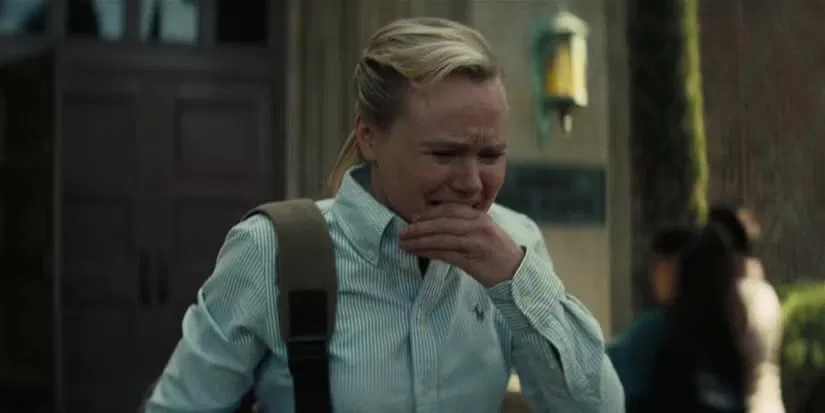
One of the film’s most affecting storylines centers on Mary Cheney, portrayed by Allison Pill. In an early sequence, a young Mary crashes her car after a breakup with her girlfriend. When she tearfully reveals to her parents that she’s gay, Dick responds with unexpected compassion:
“It doesn’t matter, sweetheart. We love you no matter what.”
Lynne, ever the political strategist, frets that Mary’s sexuality will “make things so hard.” It’s a subtle foreshadowing of what’s to come, a warning that politics will eventually outweigh love.
Love vs. Ambition: The First Trade-Off
At one point, Cheney weighs a presidential run. But Vice depicts him stepping back, not out of humility, but out of love for Mary, to protect her from the media’s scrutiny. He instead takes the CEO role at Halliburton, becoming even richer and more influential.
McKay gives us a fake-out ending here: the film “ends” happily, with the text proclaiming Cheney “chose his daughter.”
Then comes the iconic cut:
“The Cheneys would never again enter politics…”
Record scratch “NOT!”
It’s one of the film’s best meta moments, and where the real betrayal begins.
The Call That Changed Everything
That fateful phone call from George W. Bush (a hilarious Sam Rockwell) sets off Cheney’s return to power. As Vice President, he expands executive authority, orchestrates foreign wars, and rewrites U.S. policy from behind the scenes.
But in pursuing power again, he also reopens the moral wound he once seemed to heal.
The Politics of Betrayal
Years later, Cheney’s elder daughter, Liz Cheney, runs for office in Wyoming. Initially echoing her father’s “states’ rights” approach to gay marriage, she soon reverses her stance, declaring that she believes “marriage is between a man and a woman.”
The pivot devastates Mary, and in Vice, we see how Dick Cheney silently supports Liz’s decision, effectively choosing politics over family once again.
When “Family Values” Became a Slogan
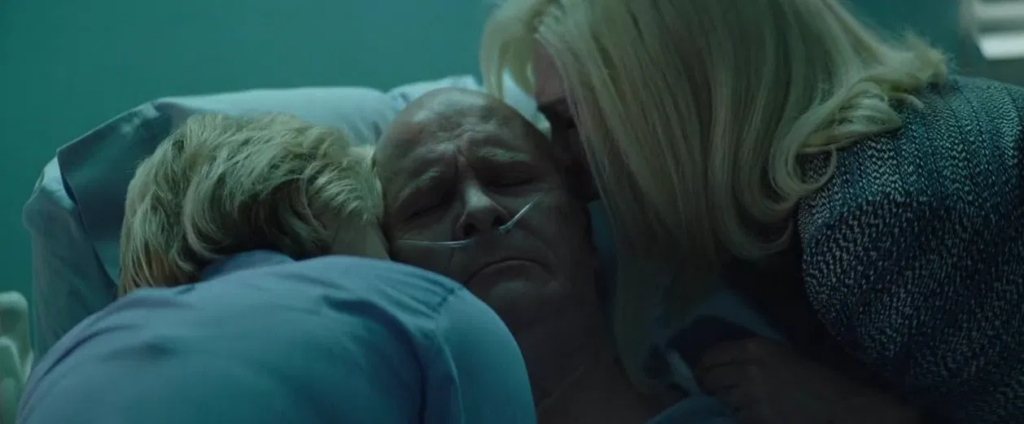
McKay drives the point home with surgical irony. Through a montage, we see Cheney endorsing his daughter’s betrayal of her sister while undergoing a heart transplant surgery, his literal chest cavity on screen, empty and waiting.
It’s an unsubtle metaphor, but a powerful one: by the end, Cheney is portrayed as a man without a heart — both physically and morally.
The Legacy of a Heartless Patriarch
By 2012, Mary Cheney had distanced herself from the family. While Liz rose in conservative ranks, Dick became a symbol of the hypocrisy that defined an era: a man who could accept his gay daughter in private but abandon her publicly for power.
That contradiction remains the cornerstone of his legacy, a reminder of how easily “love” can be sacrificed on the altar of politics.
Vice and the Art of the Ugly Truth
Despite its uneven tone, Vice succeeds in forcing us to look at Cheney not as a caricature but as a cautionary tale. It was nominated for eight Oscars, including Best Picture and though it only won for Makeup & Hairstyling, its cultural bite endures.
Critics were divided, audiences confused, but one thing was undeniable: McKay had managed to make a bureaucrat feel terrifying.
Why Vice Still Matters in 2025
Rewatching Vice today hits differently. In a post-Trump, post-pandemic, post-“alternative facts” world, Cheney feels less like history and more like prophecy. He normalized the idea that truth could be weaponized a legacy his political descendants still wield.
His treatment of Mary is the human side of that same rot: the personal cost of prioritizing control over compassion.
The Feminist and Queer Read
For LGBTQ+ viewers, Vice is more than a political biopic; it’s a mirror reflecting how queer identities are used, tolerated, and discarded by systems of power. Cheney’s initial defense of his daughter seemed revolutionary in early-2000s Republican circles, but his later silence proved it was conditional acceptance at best.
As queer visibility grows, Vice reminds us how fragile “allyship” can be when it collides with ambition.
Between Monster and Man
McKay never excuses Cheney, but he doesn’t entirely condemn him either. The film’s moral grayness mirrors America’s own — a nation that rewards power and forgets pain.
Cheney’s story forces viewers to confront uncomfortable truths about complicity, both in politics and in family dynamics.
From Washington to Wyoming: The Dynasty Continues
Liz Cheney’s later break from Trumpism especially her vocal opposition to election denial, further complicates the family story. The Cheneys are now both villains and reluctant heroes, depending on who’s telling the story.
But for Mary, the wounds likely never healed. For her, the betrayal was personal, not political.
The Final Verdict
When Dick Cheney’s obituary is written in history books, it will read like a study in contradictions: war criminal and father, defender and betrayer, man of conviction and cowardice.
Vice captures that paradox not perfectly, but powerfully turning one family’s fracture into a nation’s mirror.
Should You Watch Vice in 2025?
Absolutely if you can stomach the politics, beneath its satire and prosthetics lies a chilling truth: power corrupts, and family often pays the price.
So, is Vice worth revisiting? That depends on how much Dick you can handle on screen.