
The D.C. Gayborhood Sandwich Thrower Just Became an Unlikely Hero
The summer protest that turned into a viral meme has taken a surprising turn, one that cements its star, Sean Dunn, as more than a symbol of defiance. He’s now a free man and, to many in D.C.’s queer community, a hero.
A Viral Act of Resistance
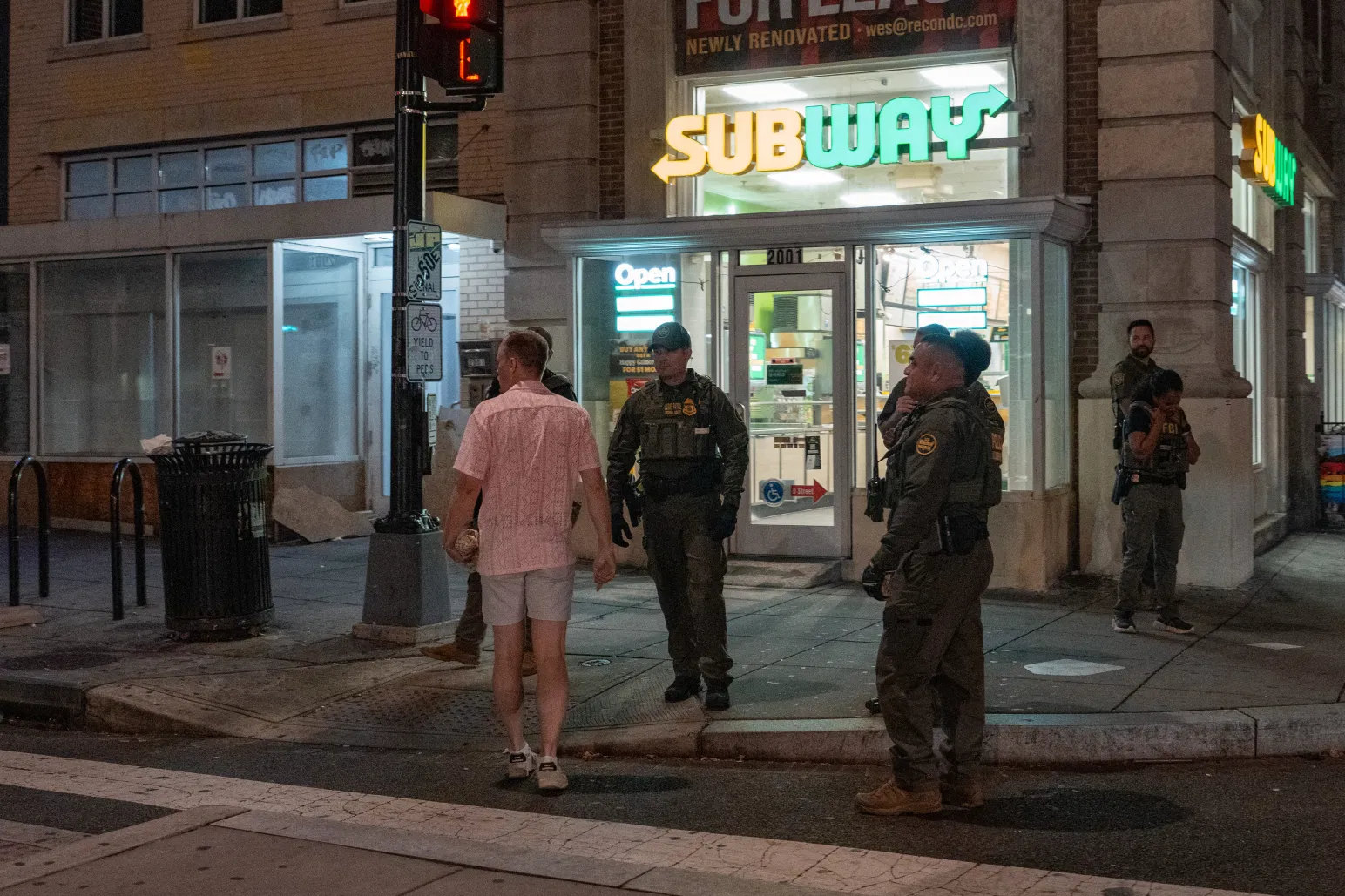
In August, a man in a pink button-down and khaki shorts made headlines for throwing a Subway sandwich at a heavily armed federal agent. The incident, which quickly spread across social media, looked like the ultimate moment of absurd protest.
But beneath the humor was something deeper: a confrontation between ordinary citizens and militarized law enforcement occupying U.S. cities under the guise of “federal protection.”
FBI and Border Patrol arrest a man on U Street corridor last night. Federal police are patrolling this area after @POTUS ordered law enforcement to increase efforts in DC. #gettyimages https://t.co/CEvkPmUz0D pic.twitter.com/Odui1F8lOj
— Andrew Leyden (@PenguinSix) August 11, 2025
The Scene on U Street
The chaotic confrontation unfolded along Washington D.C.’s U Street, a neighborhood long known as a cultural and queer nightlife hub. On that night, federal agents from ICE and CBP had set up posts near a local gay bar hosting a Latin Night event.
Sean Dunn, the so-called “sandwich thrower,” wasn’t just causing a scene; he was warning nearby residents that a raid might be about to unfold.
FREE HIM
pic.twitter.com/m4ppgu6d0j https://t.co/yiolKfhZMd
— @DCHomos (@DCHomos) August 12, 2025
Protecting the Queer Community
According to footage later shown in court, Dunn was shouting to pedestrians and patrons, warning that federal officers were staging nearby. His attorney argued that his goal was to protect the queer community from yet another example of government intimidation.
“He believed there was a real threat,” said his defense attorney. “He acted to protect people, not provoke violence.”
The Sandwich That Sparked a Movement
In the heat of the moment, Dunn flung his sandwich, still in its wrapper, at an agent’s chest. The image became instantly iconic, symbolizing an everyday citizen standing up to armed authority.
Online, it was memed endlessly. To some, it was funny. To others, it was a powerful sign that resistance doesn’t always have to look like violence.
The Trial and the Truth
Months later, Dunn found himself on trial for misdemeanor assault. Prosecutors painted him as reckless. His defense argued that he was acting in defense of the queer community.
The government even tried to push for a felony charge, but the grand jury refused, a rare move given that 99% of federal indictments are approved.
The Verdict: Not Guilty
This week, a D.C. jury cleared Dunn of all charges. They found that there was no real “assault,” and that the supposed “explosion” of sandwich ingredients, as one officer dramatically claimed, never happened.
Video evidence confirmed the sandwich was still wrapped. A witness described it as “bent and out of shape,” not splattered across the agent’s chest.
A Win for Common Sense
“You can’t interfere with something that was never going to happen,” Dunn’s lawyer told the court. And the jury agreed.
In the end, the verdict wasn’t just about a sandwich; it was about overreach, the absurdity of militarized law enforcement, and the right to question authority.
Embarrassing…..White House posted a video of Sean Dunn, the DC sandwich guy, getting arrested by an insane waste of manpower that you’d think they’re going in to get Pablo Escobar….and he’s already out on his own recognizance 🤣 pic.twitter.com/dgBvCFLwaS
— Wu Tang is for the Children (@WUTangKids) August 15, 2025
From Criminal to Folk Hero
While Dunn may not be getting his former Department of Justice job back anytime soon, he’s gained something else: folk hero status in D.C.’s gayborhood.
“He’s one of us,” said a local bartender from U Street. “He stood up when it mattered.”
Symbolism and Subtext
The image of Dunn’s pink shirt, khakis, and Subway sandwich has become emblematic of queer defiance in the face of systemic oppression. His act, small, almost comical ,revealed the tension between authority and community, between order and freedom.
The Sandwich Heard Around the World
Social media erupted after the verdict. Tweets and memes declared Dunn “Saint Submarine,” “The Hero of Hoagies,” and “The Queer Defender of U Street.” What began as slapstick has transformed into symbolism a commentary on protest and power.
Militarized Overreach
The case also reignited conversation about the federal government’s use of force in peaceful cities. The deployment of ICE and CBP officers into urban centers, including D.C., raised serious constitutional and ethical questions.
For Dunn, that was the real issue — not the sandwich.
The Power of Queer Resistance
The queer community has long relied on humor and visibility as forms of resistance. From Stonewall to social media, small acts have often sparked larger movements. Dunn’s action, ridiculous as it seemed, fits that lineage perfectly.
A Gay Hero for a New Era
In a political climate where queer rights are again under attack, the story of a man standing up to federal agents (armed only with a sandwich) feels almost poetic.
It’s a reminder that courage doesn’t always look cinematic; sometimes it’s messy, improvised, and full of carbs.
Lessons from the Sandwich Saga
The D.C. sandwich thrower’s case isn’t just a funny headline. It’s a lesson in perception, justice, and the power of community solidarity. It reminds us that symbols matter even when they come wrapped in paper and mustard.
The Final Verdict
Sean Dunn’s not guilty verdict restores more than his freedom. It restores a bit of hope that empathy and resistance can still cut through bureaucracy and intimidation.
He may not have won his job back, but he won something better: a place in queer folklore.
 Conclusion: Ain’t Nothing Limp About That
What started as a viral gag has ended in vindication. The “sandwich thrower” stood up, spoke out, and shielded his community from fear, and that’s no small thing.
The government may have tried to make an example out of him, but instead, he became an example of courage. Ain’t nothing limp about that.