
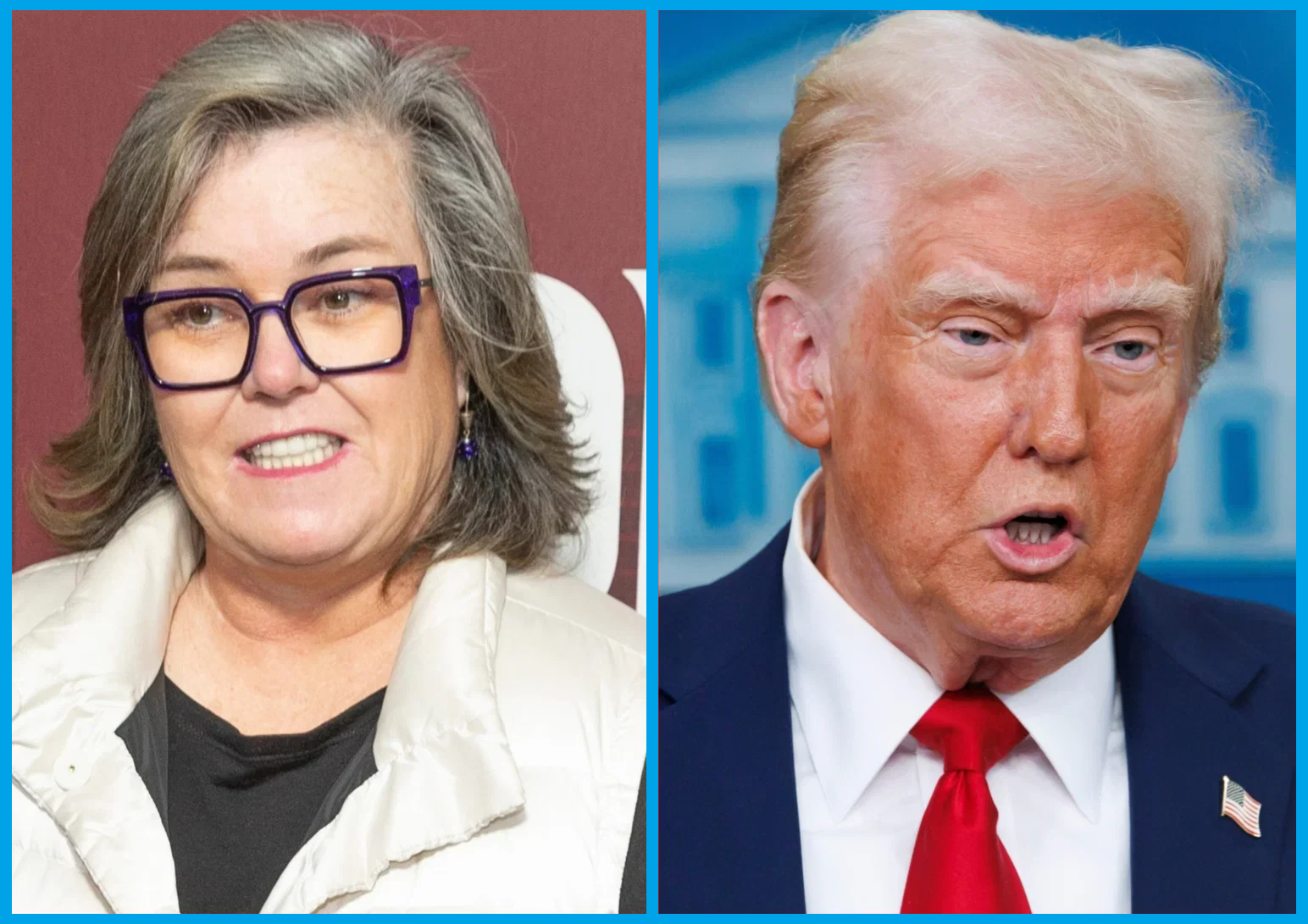
Rosie O’Donnell and Donald Trump have spent nearly two decades trading public insults.
Their feud has survived television appearances, presidential campaigns, lawsuits, and social media battles.
Now, O’Donnell has escalated the rhetoric once again this time by questioning whether Trump will live long enough to complete his current presidential term.
During a recent television interview, O’Donnell said she does not believe Trump will survive through 2028, arguing that his physical and cognitive condition appears to be deteriorating.
Her remarks immediately reignited debate about the president’s health while drawing criticism from supporters who accused her of making unsupported medical claims.
“I Don’t Think He Is Going to Survive”
Asked whether she planned to remain outside the United States until after Trump’s presidency, O’Donnell gave an unexpected answer.
Rather than discussing politics, she focused on Trump’s health.
She said she believes the president’s “demise is visible” and argued that medical professionals who have commented publicly about his appearances have raised serious concerns. She also referenced recent public verbal mistakes as evidence that she believes his condition is worsening.
Her comments quickly spread across television, social media, and political news sites.
No Public Medical Evidence Supports That Prediction
Despite the attention generated by O’Donnell’s remarks, there is no public medical evidence confirming that President Trump has a terminal illness or dementia.
The White House has continued to describe Trump as fit to serve, and no official announcement has been made indicating a life-threatening diagnosis. Public discussion about a president’s health is common, but predictions about life expectancy cannot be verified without medical evidence.
Medical experts generally caution against diagnosing—or predicting the prognosis of—public figures based solely on televised appearances or isolated public moments.
A Feud That Has Lasted Nearly 20 Years
O’Donnell’s latest comments come against the backdrop of one of American entertainment’s longest-running celebrity-political feuds.
The conflict began in 2006, when O’Donnell criticized Trump on The View over his handling of the Miss USA controversy.
Trump responded with personal insults, and the two have continued exchanging criticism ever since.
Even after moving to Ireland in 2025 following Trump’s return to the White House, O’Donnell has remained one of the president’s most outspoken celebrity critics.
Supporters and Critics React
O’Donnell’s comments produced sharply divided reactions.
Supporters argued that questions about the health of an 80-year-old president are legitimate and should be openly discussed.
Critics countered that predicting someone’s death crosses a line and risks turning political disagreement into personal speculation.
On social media, many users defended her right to express her opinion, while others accused her of relying on conjecture rather than evidence.
Presidential Health Remains a Public Issue
The health of U.S. presidents has always attracted intense public attention.
Questions surrounding age, stamina, and cognitive fitness have affected leaders from both major political parties.
Because presidents make decisions with global consequences, voters often expect transparency regarding their health.
At the same time, physicians and medical ethicists caution that diagnosing public officials from afar—without examining them personally—is inappropriate and unreliable.
That distinction has become increasingly important as political debates over age and fitness continue to intensify.
More Than Another Celebrity Feud
Rosie O’Donnell’s remarks are unlikely to change official assessments of Trump’s health.
What they have done is ensure that the conversation surrounding the president’s age and medical fitness remains firmly in the public spotlight.
Whether Americans see her comments as a legitimate concern, partisan rhetoric, or an unnecessary escalation largely depends on their political perspective.
What is certain is that one of America’s longest-running public feuds has entered yet another chapter—and, once again, the debate extends far beyond the two people at its center.