
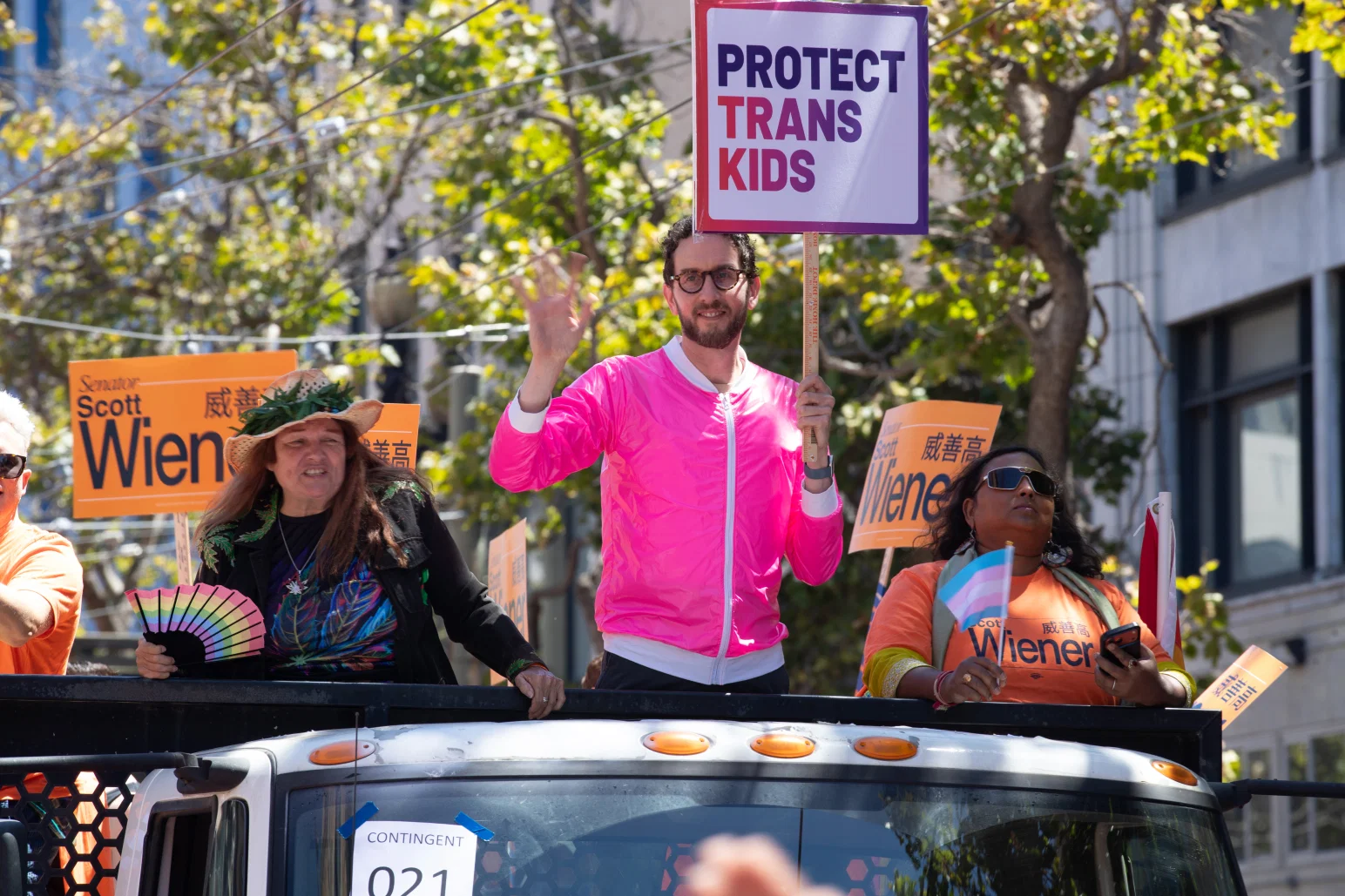
California State Senator Scott Wiener says he was forced to leave San Francisco’s annual Trans March after being confronted by protesters over his views on the Israel–Gaza war.
According to Wiener, demonstrators surrounded him, shouted accusations, made references to his “Israeli handlers,” and engaged in physical contact that left him feeling unsafe. He said it was the first time since the march began in 2004 that he had been unable to participate.
“You stopped being queer the moment you started supporting Israel, you piece of shit.” pic.twitter.com/yFKmeqIthc
— David Weigel (@daveweigel) June 27, 2026
The Protest Focused on Gaza
Video shared online shows protesters accusing Wiener of failing to strongly condemn Israel’s actions in Gaza.
Although Wiener has since described Israel’s actions in Gaza as a genocide and has criticized Prime Minister Benjamin Netanyahu, activists argued he adopted that position too late and questioned his support for Israel’s continued existence.
The confrontation quickly spread across social media and became one of the most discussed moments of Pride Weekend.
Senator Wiener’s Statement on Physical Intimidation and Harassment of Political Leaders
— Senator Scott Wiener (@Scott_Wiener) June 27, 2026
SAN FRANCISCO – In two separate incidents this week, Senator Scott Wiener (D-San Francisco) was harassed, threatened, and physically intimidated while attending public events to engage with…
Wiener Says Protest Became Harassment
Following the incident, Wiener released a public statement distinguishing peaceful protest from intimidation.
He wrote that disagreement is part of democracy but argued that being surrounded, physically touched, and prevented from participating in a public event “crosses a line.” He said he feared for both his own safety and that of his staff.
For years, I’ve condemned Netanyahu and his extremist government and the devastation they’ve inflicted on Gaza. It’s why I’ve been clear I won’t support U.S. funding for the destruction of Palestinian communities. I’ve stopped short of calling it genocide, but I can’t anymore. pic.twitter.com/71nIt6K527
— Senator Scott Wiener (@Scott_Wiener) January 11, 2026
Organizers and Protesters Saw Things Differently
Some organizers defended the demonstrators, arguing that Wiener was being held accountable for his political positions rather than targeted because of his identity.
They also disputed claims that he was in serious physical danger and criticized what they described as attempts to use the incident for political fundraising.
The differing accounts have fueled an ongoing debate about where the line lies between forceful protest and harassment.
Political Leaders Condemned the Incident
The confrontation drew swift reactions from across California politics.
San Francisco Mayor Daniel Lurie, California Senate Democrats, and other elected officials condemned the treatment Wiener received, with several describing the language directed at him as antisemitic and inconsistent with the values of Pride.
Many emphasized that political disagreements should never escalate into intimidation.
The Incident Reflects Broader Divisions
The dispute illustrates how the Israel–Gaza conflict continues to create deep divisions within LGBTQ communities.
Questions surrounding:
- solidarity
- foreign policy
- protest tactics
- antisemitism
- accountability
have become increasingly common at Pride events across North America.
The Trans March confrontation became one of the clearest examples of those tensions playing out publicly.
Pride Weekend Continued
Despite the controversy, San Francisco Pride continued with hundreds of thousands of attendees participating in marches, performances, and community events throughout the weekend.
The official Pride theme, “Resistance in Action,” reflected the broader political atmosphere surrounding LGBTQ rights in 2026.
Why the Story Matters
The confrontation has sparked discussion well beyond San Francisco because it raises larger questions about political activism within LGBTQ spaces.
Among the issues people continue debating are:
- When does protest become harassment?
- How should elected officials engage with activists?
- Can communities maintain solidarity while navigating sharp disagreements over international politics?
Those questions remain unresolved.
A Conversation That Is Likely to Continue
The Scott Wiener incident has become one of the defining political moments of this year’s Pride season.
Supporters view the confrontation as an unacceptable act of intimidation against a longtime LGBTQ advocate.
Critics argue elected officials should expect forceful protests over their political positions.
Regardless of perspective, the episode has intensified conversations about protest, safety, and unity within LGBTQ communities at a time when many advocates are also responding to broader challenges facing LGBTQ rights.