

Some shows fade with time. The Comeback never really did.
More than two decades after its debut, the HBO cult favorite continues to feel sharp, relevant, and oddly ahead of its time. And for Dan Bucatinsky, who has been part of the series since the beginning, that lasting impact is no accident.
At the center of it all is Valerie Cherish, played by Lisa Kudrow, a character whose relentless pursuit of relevance somehow turned into something deeper.
Her resilience, Bucatinsky says, is exactly why she became a gay icon.
Why The Comeback Still Feels Ahead of Its Time
What makes The Comeback stand out isn’t just the comedy.
It’s the way it reflects the entertainment industry itself. Over the years, the show has tackled everything from reality TV to the pressures of staying visible in a culture obsessed with the next new thing.
Now, with its latest season, it’s turning toward something even bigger.
Artificial intelligence.
Bucatinsky describes the rise of AI as a potential “extinction moment” for creatives, which becomes a central theme in the show’s final chapter.
It’s a bold move, but it fits. The series has always thrived on uncomfortable truths.
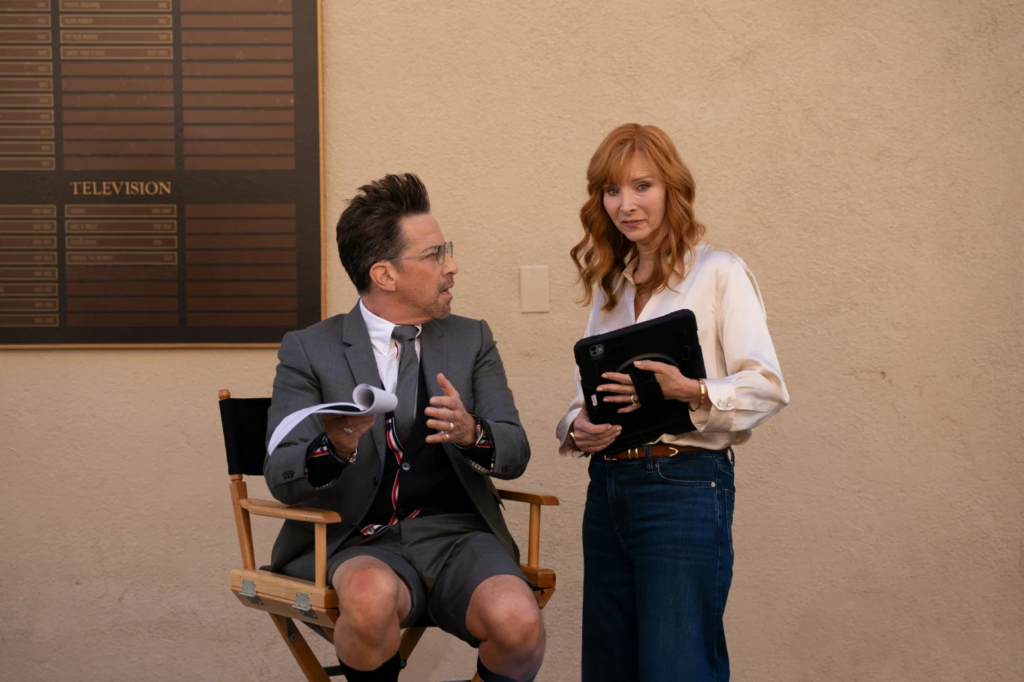
Billy’s Power Trip Changes Everything
Bucatinsky’s character, Billy Stanton, has always been intense.
Volatile, emotional, and ambitious. But this season pushes him further. He finally gets what he has been chasing for years: status.
And it changes him.
According to Bucatinsky, Billy’s new position allows him to explore his own desire for fame, not just as a manager, but as someone who wants the spotlight for himself.
That shift adds a new layer to a character that was already unpredictable.
A Tribute That Hits Hard
While the season leans into satire, it also carries emotional weight.
One of the most significant moments is a tribute to Mickey, Valerie’s longtime friend and hairdresser, played by Robert Michael Morris.
Morris passed away in 2017, and his absence is deeply felt.
Bucatinsky describes the tribute as essential, not just for the story, but for the people who worked with him. It offered a sense of closure both on screen and off.
The Show’s Place in Queer Culture
Over time, The Comeback has become more than a TV series.
It’s part of queer cultural history.
From its exploration of relevance and identity to its unapologetic tone, the show has consistently connected with LGBTQ audiences. Valerie Cherish’s struggle to stay visible mirrors a broader experience that resonates far beyond Hollywood.
That connection is why it continues to matter.
Looking Back—and Forward
Even as this season is framed as a final chapter, there’s a sense that The Comeback doesn’t really end.
It evolves.
Bucatinsky himself has imagined countless scenarios for Valerie over the years, from period dramas to TED Talks.
That flexibility is part of what keeps the show alive in people’s minds.
A Legacy That Refuses to Fade
In a landscape where most shows come and go quickly, The Comeback has done something rare.
It stayed relevant by embracing change, even when that change was uncomfortable.
And through it all, Dan Bucatinsky has been right there, helping shape a series that continues to reflect, challenge, and entertain.
So even if this really is the end, the impact is already set.
The kind that doesn’t fade with time.