
Queer Love Meets Fierce Resistance
Some heroes fight with guns. Others fight with courage, creativity, and a pocket full of revolution.
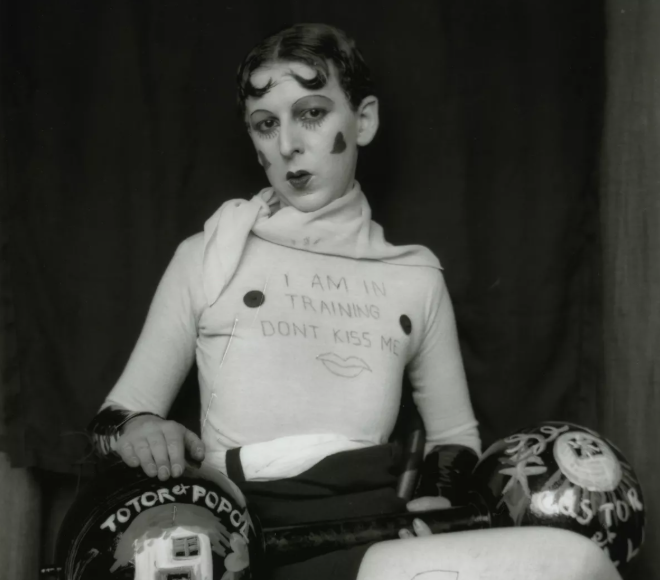
Claude Cahun and Marcel Moore, two queer and gender-nonconforming artists from France, rewrote the rules of what resistance can look like. Long before the world openly spoke about LGBTQ identity, they lived their truth in defiance of every norm: artistic, social, and later, fascist.
They didn’t just love loudly.
They fought fiercely.
The Lovers Who Met Like Lightning
When they met as teenagers in 1909, Cahun and Moore described it as a lightning strike a moment of recognition that changed everything. Their bond deepened into romance and artistic partnership. Later, their parents married each other, technically making them step-siblings… but even that didn’t break their connection.
They remained inseparable in life, art, and revolution.
Their art challenged all expectations:
★ Androgynous portraits
★ Surrealist experiments with identity
★ Bold rejection of gender binaries
Cahun once said:
“Neuter is the only gender that suits me.”
They were decades ahead of our conversations about gender, truly queer icons before the word existed.
When Nazis Came, They Fought Back With Art
In the mid-1930s, political tensions pushed the pair to move to the island of Jersey, thinking it would stay neutral. But in 1940, German forces invaded.
Queer. Jewish. French.
Their existence alone was resistance.
But they wanted more than survival, they wanted sabotage.
Using their creativity as a weapon, they crafted what they called “paper bullets” poems, anti-Nazi messages, and pacifist slogans designed to erode morale.
They didn’t graffiti walls
They didn’t wave flags
They targeted minds
Moore, fluent in German, translated their messages. Together, they secretly planted notes in soldier coat pockets, leaving messages like:
“Without end.”
“The Führer is sending you to your death.”
“Why die for a madman?”
Reverse pickpocketing Nazis at night?
Iconic queer chaos.
They wanted soldiers to question everything, and it worked.
The Price of Defiance
Years passed before the Nazis discovered them. When the Germans finally raided their home, they found their printed materials to charge them with treason.
Facing torture and a death sentence, they attempted to take their own lives rather than let fascism claim them. German doctors saved them only to keep them alive for execution.
But fate, for once, was kind.
On Victory in Europe Day, 1945, the island was liberated.
They survived and lived to witness the fall of the regime they had rebelled against.
Art won that day.
Legacy: Art as Identity & Revolution
Cahun and Moore spent the rest of their lives together, quietly, but their influence roared into the future:
🎭 John Cameron Mitchell is developing a play based on their story
🌈 LGBTQ+ artists see them as trailblazers of identity and resistance
🎤 David Bowie cited Cahun as inspiration for his gender-fluid persona
Their work reminds us of one truth:
Art is never neutral. It is either a reinforcing power or resisting it.
Their resistance didn’t rely on armies or nations, just love, courage, and paper bullets.
Why Their Story Matters Today
Whenever someone claims queer lives don’t shape history, point them here.
Whenever someone says art can’t fight fascism:
Claude Cahun and Marcel Moore would like a word.
Their love was revolutionary.
Their art was insurgent.
Their existence was a refusal.
And in the darkest era of modern history, they won.