
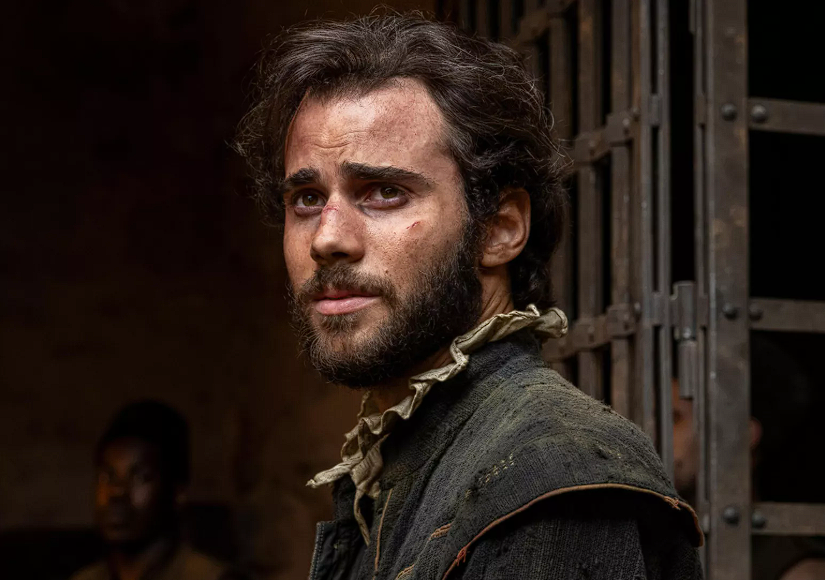
For more than four centuries, Miguel de Cervantes has been celebrated as the father of the modern novel and the brilliant mind behind Don Quixote.
But a provocative new Spanish film, The Captive, dares to ask a question scholars have debated for decades: Was Cervantes secretly gay?
A Bold Reimagining of History
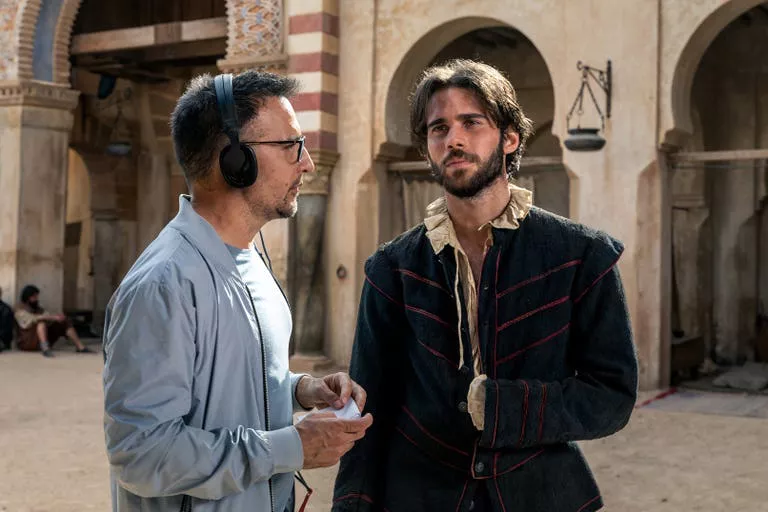
Written and directed by acclaimed gay Spanish-Chilean filmmaker Alejandro Amenábar (The Others, Open Your Eyes), The Captive focuses on a turbulent period of Cervantes’ early life.
Before becoming Spain’s literary icon, Cervantes served as a soldier in the Spanish-Ottoman wars.
In 1575, he was captured by Algerian pirates and held in Algiers for five years, surviving multiple escape attempts and unimaginable hardship.
The film takes this little-documented chapter and imagines a daring scenario: Cervantes survived not just through wit and courage, but through an illicit romance with his powerful captor.
The Alleged Affair With Hassan Bajá
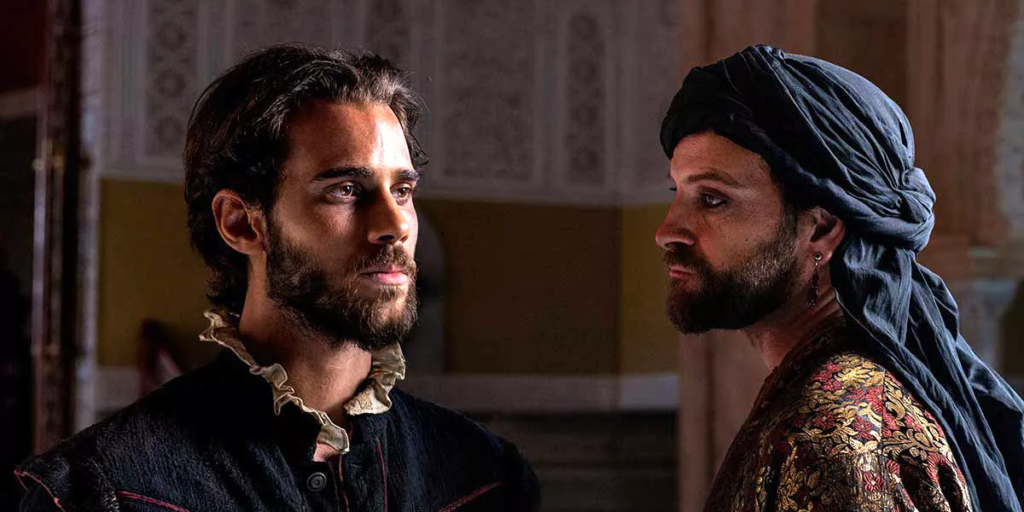
Amenábar’s drama suggests that Cervantes engaged in a secret relationship with Hassan Bajá, the governor of Algiers.
Played by Italian actor Alessandro Borghi, Bajá is depicted as a cultured, magnetic leader who was himself once a captive.
Spanish star Julio Peña portrays Cervantes as both dashing and defiant, echoing the romantic allure of Shakespeare in Love.
While there is no definitive historical evidence of a sexual relationship, scholars note that Algiers in the 16th century had a relatively permissive culture around same-sex relations.
Historical records also show Bajá’s “queer sensibilities,” giving the film a plausible if speculative foundation.
Outrage and Praise Across Spain
The suggestion that Spain’s most celebrated author might have shared a gay love affair has ignited heated debate.
Conservative commentators accuse the film of “rewriting history” and disrespecting a national icon, while progressive audiences praise its courage in exploring queer possibilities long buried by tradition.
Even José Manuel Lucía Megías, a Cervantes historian who consulted on the film, admits the story leans heavily on myth.
Yet he acknowledges that Amenábar’s approach “sparks renewed interest” in Cervantes’ life and work.
Amenábar’s Artistic Defense
In interviews, Amenábar, a gay man himself, defends his creative liberties:
“Two men who shared a traumatic experience captivity and who also shared a love of the arts.
Renouncing that possibility would have meant losing a very suggestive dramatic element.”
He maintains that the backlash simply reveals how homophobia persists in modern Spain:
“The mere existence of the film, even before release, has already provoked reactions that betray rejection, even hatred.”
View this post on Instagram
Why It Matters Today
By daring to imagine Cervantes as a gay hero, The Captive does more than entertain.
It challenges lingering assumptions about masculinity, sexuality, and the boundaries of historical storytelling.
Whether Cervantes truly loved his captor or merely played along to survive, the film positions him as a symbol of queer resilience in a world that still debates the legitimacy of same-sex love.
Release and Reception
The Captive premiered at the Toronto International Film Festival before opening in Spanish theaters, where it continues to draw long lines and fiery opinion pieces.
International rollouts are planned, though a U.S. release date has yet to be announced.
Given the buzz, distributors expect strong festival interest across Europe and Latin America.
Key Takeaway
Fact or fiction, The Captive proves that history’s greatest figures remain open to interpretation.
By blending historical record with queer imagination, Alejandro Amenábar ensures that Miguel de Cervantes is not just remembered as the author of Don Quixote but as a man whose life still inspires debate, desire, and daring creativity.